

What is the Pneumatic Conveying of Alumina Powder? Understanding Its Design Principles
Alumina powder, a critical material in various industrial applications, often requires efficient and reliable transport methods. Pneumatic conveying stands out as a sophisticated solution for handling such powders, offering advantages like reduced contamination, improved safety, and enhanced process control. This article delves into the fundamentals of alumina powder pneumatic conveying, exploring its core concepts and the essential design principles that underpin its successful implementation.
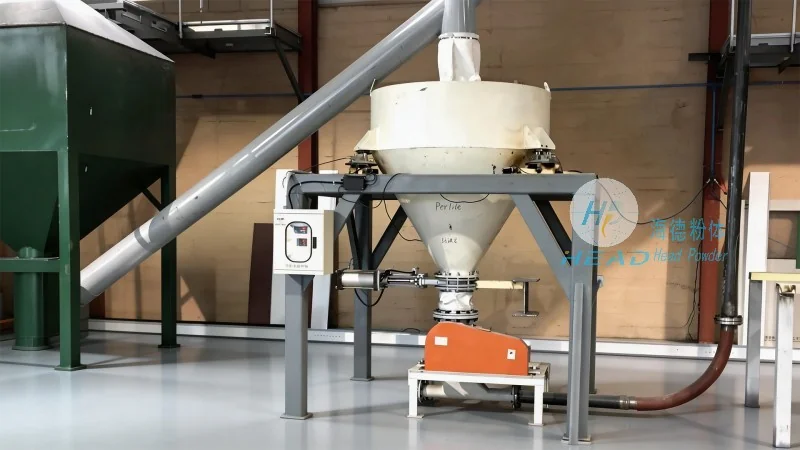
HeadPowder: A Leader in Pneumatic Conveying Solutions
At Shandong HeadPowder Engineering Co., Ltd., we specialize in providing tailored pneumatic conveying systems for diverse industrial needs. With our headquarters located in Shandong, China, our team of experts leverages extensive experience and cutting-edge technology to deliver solutions that meet the highest standards of performance and reliability. Our commitment to quality and customer satisfaction has established us as a trusted partner in the field of material handling, particularly for alumina powder applications.
Understanding Pneumatic Conveying Systems
Pneumatic conveying involves the transport of bulk materials, such as alumina powder, using a stream of air or gas. The process typically operates under either positive pressure (pressure conveying) or negative pressure (vacuum conveying), each with distinct characteristics and applications. Positive pressure systems are ideal for long-distance or high-volume transport, while vacuum systems are better suited for shorter distances or when handling materials that are sensitive to pressure changes. The choice of system depends on factors like material properties, required throughput, and operational environment.
Key Design Principles for Alumina Powder Conveying
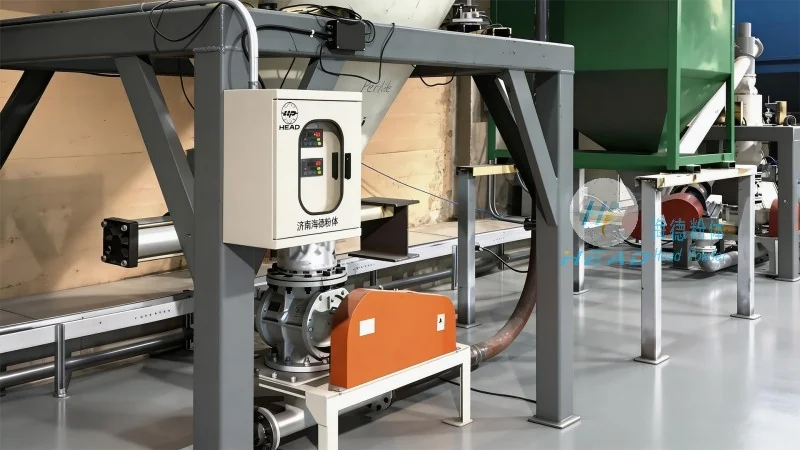
The successful design of a pneumatic conveying system for alumina powder hinges on several critical principles. First, the selection of appropriate equipment, including the type of conveyor (e.g., dilute-phase or dense-phase), is paramount. Dilute-phase systems, which use high-velocity air to suspend particles, are efficient for short to medium distances but may not be suitable for abrasive or fine powders. In contrast, dense-phase systems, which operate at lower velocities and higher particle concentrations, offer better control and reduced wear on equipment. For alumina powder, which can be abrasive and fine, a dense-phase system is often preferred to minimize degradation and ensure consistent flow.
Second, the design must consider the material's physical properties, such as particle size distribution, density, and flowability. Alumina powder typically has a wide range of particle sizes, and the system must be engineered to handle this variability without clogging or loss of efficiency. Proper sizing of the conveying line, including the diameter and length, is crucial to maintain optimal air-to-material ratios and prevent excessive pressure drops. Additionally, the use of appropriate valves, filters, and separation equipment is essential to ensure smooth operation and prevent material buildup in the system.
Advantages of Pneumatic Conveying for Alumina Powder
Implementing a pneumatic conveying system for alumina powder offers numerous benefits that enhance overall operational efficiency. Unlike traditional methods like bucket elevators or screw conveyors, pneumatic systems eliminate the need for mechanical contact with the material, reducing the risk of contamination and wear. This is particularly important for alumina powder, which is often used in high-purity applications, such as in the production of ceramics, refractory materials, and electronic components. Furthermore, pneumatic conveying allows for seamless integration with other processes, enabling automated material handling and reducing labor costs.
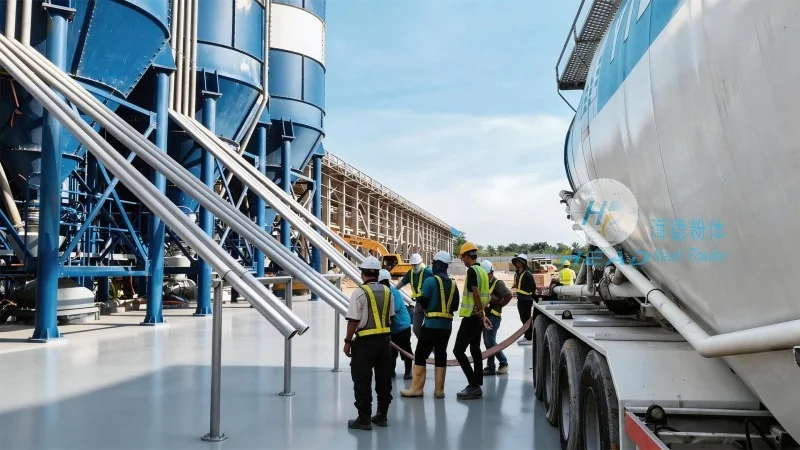
Another key advantage is the ability to control the flow rate and direction of the material, providing flexibility in process design. This is especially valuable in industries where alumina powder is used in multiple stages, such as in the manufacturing of aluminum or as a filler in composite materials. The system can be easily adjusted to meet varying production demands, ensuring that the material is delivered precisely where and when it is needed. Additionally, pneumatic conveying systems are relatively compact and can be installed in confined spaces, making them suitable for facilities with limited floor space.
Conclusion: Optimizing Alumina Powder Handling with Expert Solutions
As the demand for alumina powder continues to grow across various industries, the importance of efficient material handling cannot be overstated. Pneumatic conveying, with its robust design principles and proven advantages, remains a leading solution for transporting alumina powder safely and effectively. At Shandong HeadPowder Engineering Co., Ltd., we combine our expertise in material science, engineering, and process optimization to deliver customized pneumatic conveying systems that meet the unique requirements of each client. By adhering to the fundamental design principles discussed in this article, businesses can enhance their operational efficiency, reduce costs, and ensure the quality of their alumina powder products. Whether you are in the ceramics, aluminum, or electronics industry, our team is ready to provide the tailored solutions you need to optimize your material handling processes.