HeadPowder, a leading engineering company based in Shandong, China, specializes in the design and manufacturing of advanced material handling systems tailored for the food processing industry. This article explores the fundamental principles and operational characteristics of monosodium glutamate (MSG) material conveying lines, which are crucial for efficient production and material flow in MSG manufacturing facilities.
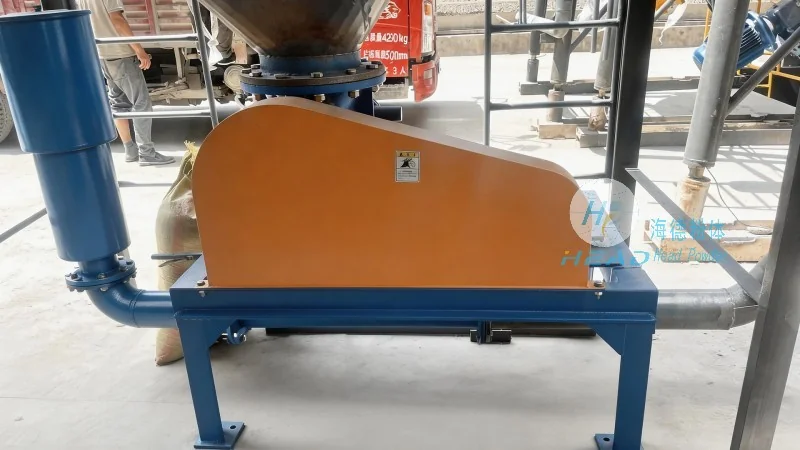
Principle of Operation for Monosodium Glutamate Material Conveying Lines
The core principle of monosodium glutamate material conveying lines lies in the systematic transport of raw materials, intermediate products, and finished goods through a network of mechanical components. These systems typically integrate various types of conveyors, such as belt conveyors, screw conveyors, and bucket elevators, each designed to handle specific material characteristics and operational requirements. The belt conveyor, for instance, uses a continuous loop of flat or troughed belts to move bulk materials horizontally or at a slight incline, ensuring smooth and consistent flow. Screw conveyors, on the other hand, employ a rotating helical screw to push materials forward, making them ideal for vertical or inclined transport in confined spaces. Bucket elevators are used for vertical lifting, where buckets attached to a chain or belt scoop up materials from a lower level and discharge them at a higher elevation. The integration of these components allows for a seamless, automated material handling process that minimizes manual intervention and optimizes production efficiency.
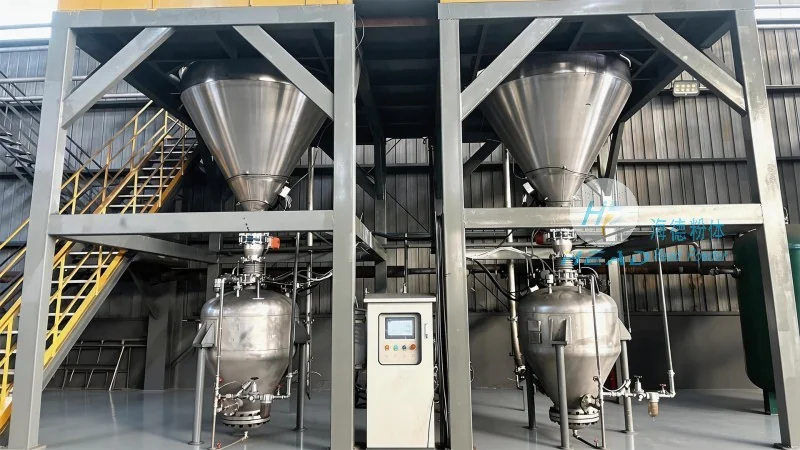
Working Scene Characteristics of Monosodium Glutamate Material Conveying Lines
The working scene characteristics of monosodium glutamate material conveying lines are shaped by the specific demands of the MSG production process. In a typical MSG manufacturing facility, the conveying system must accommodate the handling of various raw materials, including corn, wheat, and other agricultural products, as well as intermediate products like fermented broth and crystallized MSG. The system is designed to operate in a clean and hygienic environment, adhering to food safety standards to prevent contamination. One key characteristic is the need for high throughput and reliability, as the conveying line must support continuous production runs without interruptions. For example, in the raw material intake stage, the system may involve large-capacity belt conveyors to transport bulk grains from storage silos to processing units. In the intermediate processing stage, screw conveyors are used to move fermented broth between tanks and reactors, ensuring uniform mixing and temperature control. The final stage involves conveying finished MSG crystals to packaging lines, where belt conveyors with adjustable speed and direction control are employed to match the packaging line's output rate. Additionally, the conveying system must be flexible enough to handle different material types and sizes, such as granules, powders, or crystalline solids, by adjusting conveyor speed, inclination, or the type of conveying mechanism. This adaptability is crucial for maintaining production continuity and responding to changes in production volume or product specifications.
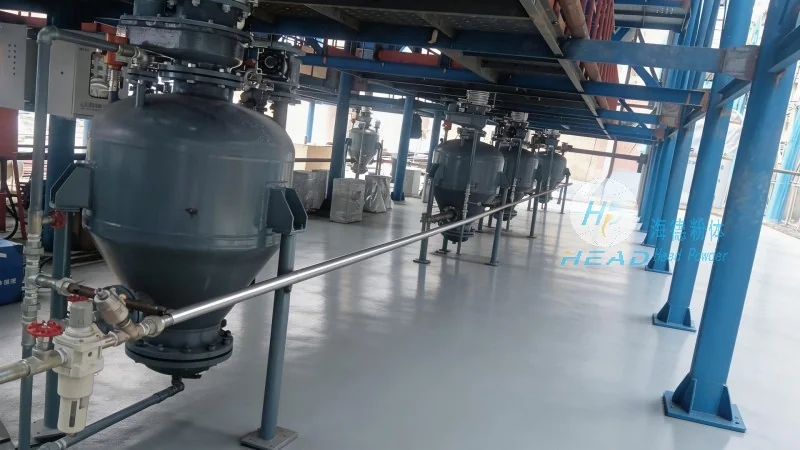
Key Features and Advantages of Monosodium Glutamate Material Conveying Lines
Monosodium glutamate material conveying lines offered by HeadPowder are equipped with several key features that enhance their performance and suitability for MSG production. Firstly, the systems are designed with high durability and low maintenance requirements, using robust materials such as stainless steel and heavy-duty bearings to withstand the abrasive nature of MSG particles and continuous operation. This reduces downtime and operational costs for manufacturers. Secondly, the conveying lines are equipped with advanced control systems, including variable frequency drives (VFDs) and programmable logic controllers (PLCs), which allow for precise speed and direction control. This enables operators to adjust the conveyor speed in real-time to match production demands, improving overall efficiency. Thirdly, the systems incorporate safety features, such as emergency stop buttons, overload protection, and interlocking mechanisms, to ensure safe operation and prevent accidents in the workplace. These features align with international safety standards and contribute to a secure working environment. Furthermore, the modular design of the conveying lines allows for easy installation, maintenance, and expansion, making them adaptable to changing production needs. For instance, additional conveyor sections or storage units can be added to the system without major modifications, providing flexibility for future growth. The combination of these features makes the monosodium glutamate material conveying lines a reliable and efficient solution for MSG manufacturers, supporting their production goals while maintaining operational excellence.




