

What is the Vanadium Oxide Powder Pneumatic Conveying System? What is its Design Principle?
Vanadium oxide is a critical material in various industrial applications, including catalysis, battery technology, and chemical manufacturing. The efficient and reliable transport of vanadium oxide powder from one location to another is essential for maintaining production efficiency and product quality. Pneumatic conveying systems have emerged as a preferred method for handling such powders due to their ability to transport materials without direct contact with mechanical components, reducing contamination and wear. This article explores the concept of vanadium oxide powder pneumatic conveying equipment and delves into its underlying design principles.
Understanding Pneumatic Conveying Technology
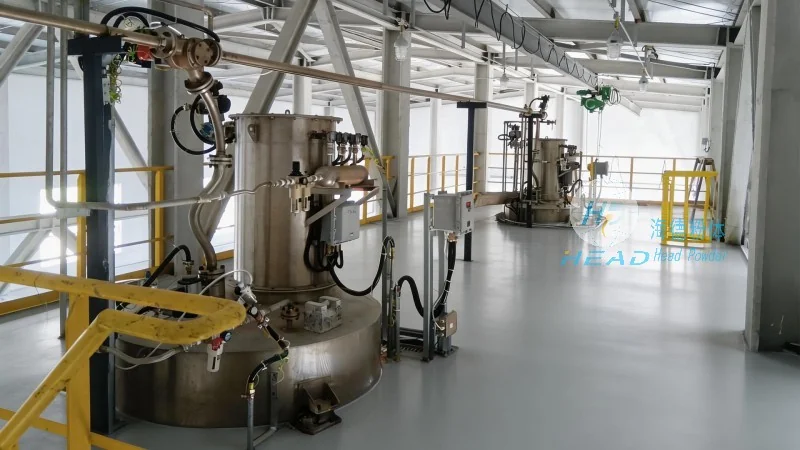
Pneumatic conveying, also known as pneumatic transport, is a process that uses pressurized air or gas to move bulk materials, such as powders and granules, through a pipeline system. The technology operates on the principle of creating a flow of air that entrains the solid particles, carrying them from the source to the destination. There are two primary types of pneumatic conveying systems: dilute-phase and dense-phase. Dilute-phase systems typically operate at higher velocities and lower pressure differentials, suitable for short-distance transport of fine powders. Dense-phase systems, on the other hand, use lower velocities and higher pressure differentials to move materials more gently, minimizing particle degradation and ensuring a more controlled flow.
Design Principles of Vanadium Oxide Powder Pneumatic Conveying Equipment
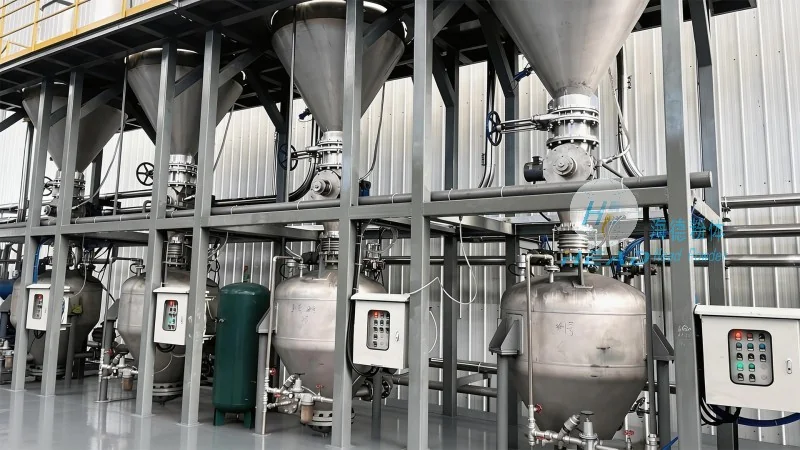
The design of a vanadium oxide powder pneumatic conveying system involves several key considerations to ensure optimal performance and safety. First, the system must be tailored to the specific properties of vanadium oxide powder, which may include its particle size distribution, moisture content, and flow characteristics. For instance, vanadium oxide powders are often fine and can be prone to agglomeration, requiring specialized equipment to maintain their flowability. The conveying line design, including the diameter and length of the pipeline, is critical. Larger diameters reduce friction losses and pressure drops, while shorter lines minimize energy consumption. Additionally, the system incorporates components such as feeders, air movers (e.g., blowers or compressors), and separation units to control the flow and prevent blockages.
Key Components and Their Functions
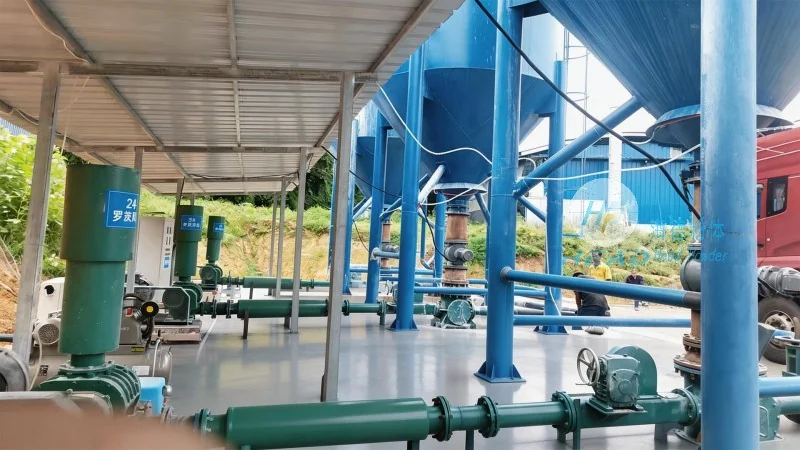
Several components work in tandem to ensure the smooth operation of a vanadium oxide powder pneumatic conveying system. The material feeder is responsible for accurately metering the powder into the conveying line, ensuring a consistent flow rate. This is particularly important for vanadium oxide, as variations in feed rate can affect downstream processes. The air mover, typically a high-pressure blower or compressor, generates the necessary airflow to entrain the powder particles. The choice of air mover depends on the system's capacity and the required pressure. Separation units, such as cyclones or filters, are used to separate the powder from the air stream at the destination, allowing for the recovery of the material and the release of clean air. These components are designed to handle the specific challenges posed by vanadium oxide, such as its potential for dust generation and the need for minimal contamination.
Advantages of Using Pneumatic Conveying for Vanadium Oxide
Implementing a pneumatic conveying system for vanadium oxide powder offers several advantages over traditional mechanical conveying methods. First, it eliminates the need for moving parts in contact with the material, reducing the risk of contamination and equipment wear. This is crucial for vanadium oxide, which is often used in high-purity applications where even trace contaminants can impact product performance. Second, pneumatic conveying systems can handle a wide range of particle sizes and flow rates, making them versatile for various industrial needs. Third, the technology allows for a more controlled and gentle transport of the powder, minimizing particle degradation and preserving the material's properties. Finally, the system can be integrated with other processing equipment, such as reactors or reactors, to streamline production processes and improve overall efficiency.
About Shandong HeadPowder Engineering Co., Ltd.
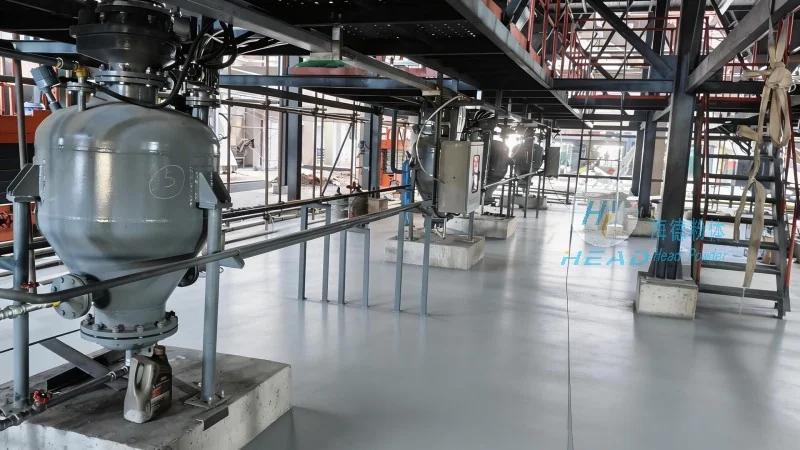
Shandong HeadPowder Engineering Co., Ltd., commonly known as HeadPowder, is a leading manufacturer of specialized powder handling equipment. With a focus on innovation and quality, HeadPowder has developed advanced pneumatic conveying systems tailored to the unique requirements of various industries, including the vanadium oxide sector. The company's expertise lies in designing and manufacturing equipment that ensures efficient, safe, and reliable transport of powders, such as vanadium oxide, while adhering to the highest standards of performance and durability. HeadPowder's commitment to customer satisfaction and technological advancement has made it a trusted partner for businesses seeking to optimize their powder handling processes. The company's facilities are located in Shandong, China, where it leverages local resources and expertise to deliver cutting-edge solutions for the global market.