Gray calcium powder conveying lines are essential industrial equipment used in various applications, particularly in the processing and transportation of calcium-based powders. This article provides a detailed overview of the operation process and working principles of such systems, highlighting the key components and mechanisms that ensure efficient and reliable powder handling.
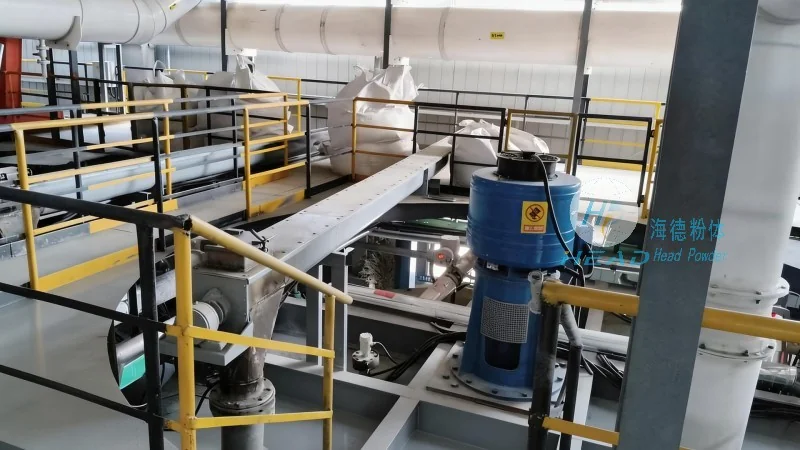
HeadPowder, a leading manufacturer based in Shandong, China, specializes in the design, production, and installation of advanced powder conveying systems. With a strong commitment to quality and innovation, the company has established itself as a trusted partner for industries requiring robust and efficient powder handling solutions.
Key Components and Their Functions
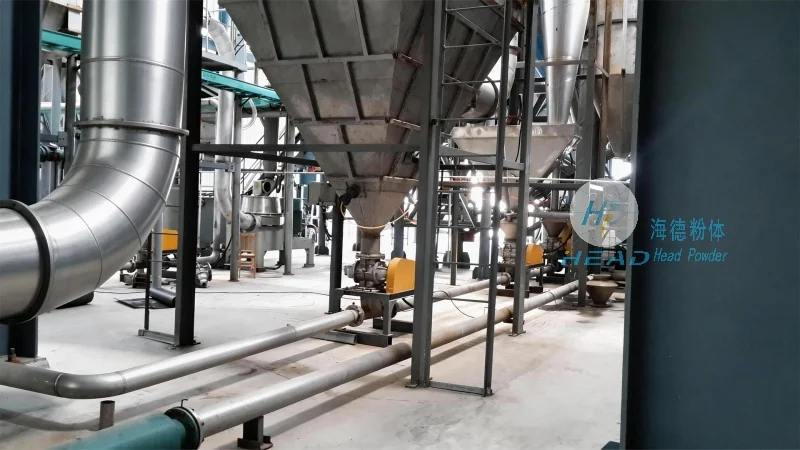
The gray calcium powder conveying line typically consists of several critical components that work in tandem to ensure smooth operation. The main elements include a hopper for material storage, a feeder to control the flow rate, a conveyor system (such as a screw or pneumatic conveyor) to transport the powder, and a dust collection system to maintain air quality and prevent contamination.
Operation Process
The operation of a gray calcium powder conveying line begins with the loading of raw gray calcium powder into the hopper. The feeder then regulates the discharge rate, ensuring a consistent flow of material into the conveyor. Depending on the system design, the conveyor may use mechanical force (e.g., a screw conveyor) or pneumatic pressure (e.g., a pneumatic conveyor) to move the powder through the pipeline. The material is then transported to the desired destination, such as a storage silo or processing unit. Throughout the process, the dust collection system continuously removes airborne particles, maintaining a clean and safe working environment.
Working Principle
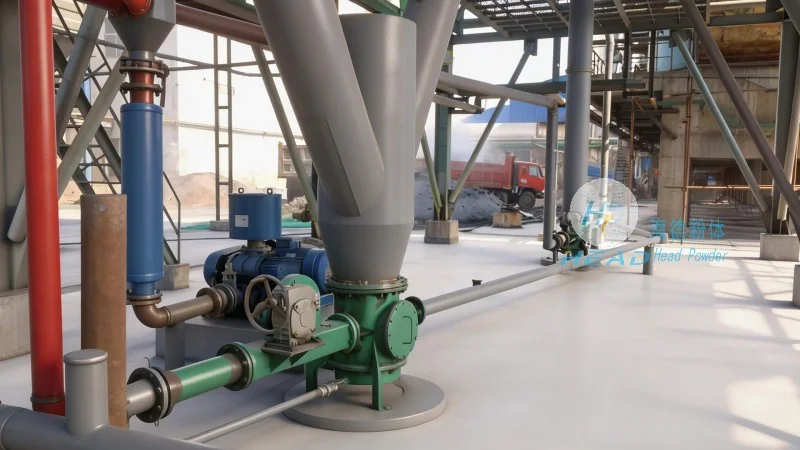
The working principle of the gray calcium powder conveying line is based on the principles of fluidization and pneumatic transport. In a pneumatic system, compressed air is introduced into the pipeline, creating a flow that lifts and moves the powder particles. The screw conveyor operates by rotating a helical screw, which pushes the powder forward through the tube. Both systems rely on precise control of pressure, flow rate, and material characteristics to achieve optimal performance. The design of the conveying line is tailored to the specific properties of gray calcium powder, such as its density, moisture content, and particle size, to ensure efficient and low-loss transportation.
Benefits and Applications
Gray calcium powder conveying lines offer numerous benefits, including high efficiency, low maintenance costs, and the ability to handle large volumes of material. These systems are widely used in industries such as construction, chemical manufacturing, and food processing, where the reliable transportation of calcium-based powders is critical. The advanced technology employed in these systems ensures minimal product degradation and contamination, making them suitable for applications requiring high purity standards.




