Principle and Working Scene Characteristics of Pneumatic Conveying Equipment for Lithium-Ion Battery
Release time:2026-09-18 23:01:31
name of the company:Shandong Headpowder Engineering Co., Ltd.
telephone:156-6277-7102
contacts:Zhang manager
HeadPowder, a leading manufacturer based in Shandong, China, specializes in the design and production of advanced pneumatic conveying systems tailored for handling lithium-ion battery nanomaterials. These systems are engineered to address the unique challenges associated with processing fine powders used in modern battery manufacturing, ensuring efficient, safe, and reliable material transport. The equipment is a critical component in the production line, facilitating the seamless movement of nanomaterials from storage to processing units.
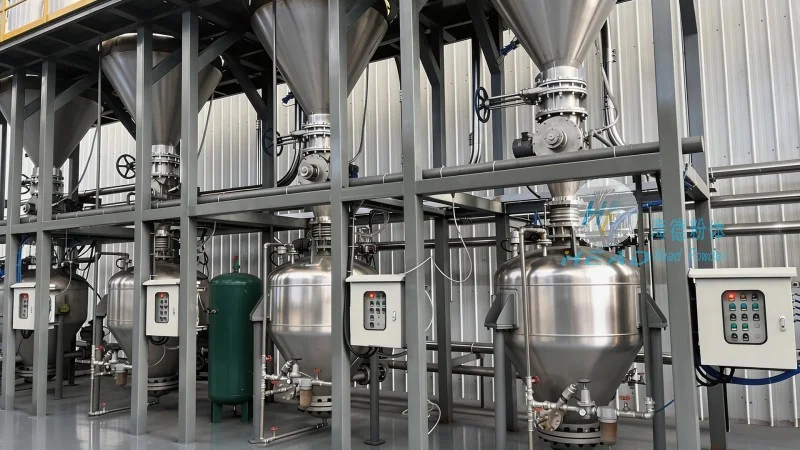
Core Principles of Pneumatic Conveying Technology
The pneumatic conveying system operates on the fundamental principle of using compressed air to transport bulk materials through a pipeline. For lithium-ion battery nanomaterials, which often include active materials like lithium cobalt oxide, lithium iron phosphate, or graphite, the system must be designed to handle fine particles with high precision. The equipment typically consists of a hopper for material storage, a rotary valve for controlled discharge, a conveying line, and a receiver for material deposition. The air flow is managed by a blower or compressor, creating a pressure differential that propels the material through the system. Key to the efficiency of this process is the selection of appropriate air velocity and pressure, which ensures that the nanomaterials are conveyed without degradation or agglomeration. The system also incorporates features such as pulse jet cleaning to maintain the integrity of the conveying line and prevent clogging, a critical consideration for handling sensitive nanomaterials.
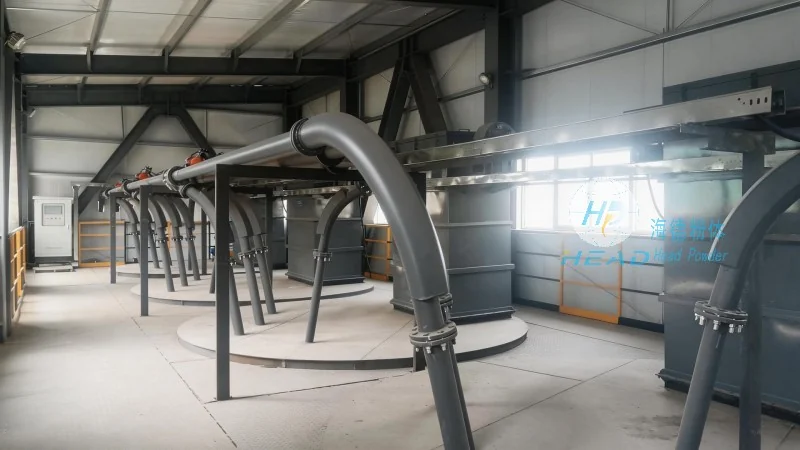
Working Scene Characteristics and Application Scenarios
The working scene characteristics of the pneumatic conveying equipment for lithium-ion battery nanomaterials are tailored to the specific demands of battery manufacturing facilities. These systems are commonly employed in scenarios where the nanomaterials need to be transported over short to medium distances within a production plant. For instance, in a battery cell production line, the equipment may be used to transfer active materials from bulk storage silos to mixing and coating machines. The compact design of the system allows it to fit into confined spaces typical of modern manufacturing environments, while the low noise and vibration levels ensure minimal disruption to adjacent operations. Additionally, the system’s ability to handle high volumes of material at a consistent rate makes it suitable for continuous production processes, which are essential for meeting the high demand in the battery industry. The working scene also emphasizes safety, as the equipment is designed with explosion-proof features to handle potentially flammable nanomaterials, and with dust collection systems to maintain a clean and safe working environment. The adaptability of the system to different material types and particle sizes further enhances its applicability across various battery production stages, from raw material handling to final product assembly.
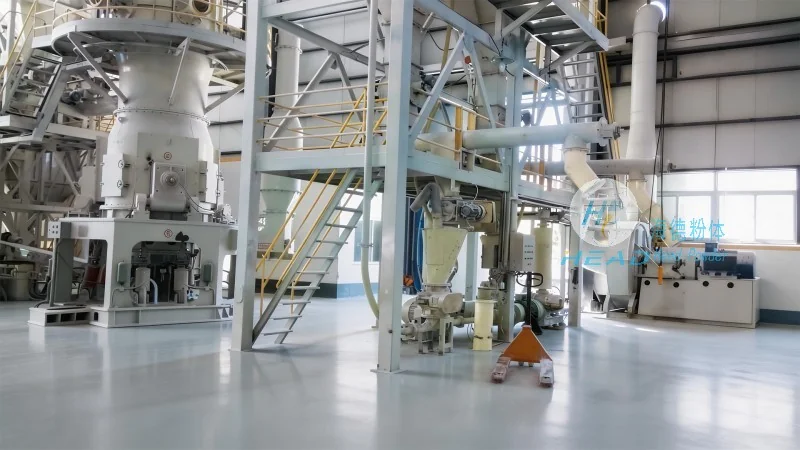
Technical Advantages and Performance Metrics
HeadPowder’s pneumatic conveying equipment for lithium-ion battery nanomaterials offers several technical advantages that contribute to its effectiveness in industrial applications. One of the primary advantages is the high conveying efficiency, which minimizes material loss and ensures that the nanomaterials are delivered to the processing units with minimal degradation. The system’s ability to maintain a consistent air flow and pressure ensures that the material transport rate is stable, which is crucial for maintaining production line throughput. Another key advantage is the low maintenance requirement, as the design incorporates components that are resistant to wear and corrosion, reducing downtime and operational costs. The system also features advanced control systems that allow for real-time monitoring of the conveying process, enabling operators to adjust parameters such as air pressure and flow rate to optimize performance. Performance metrics such as conveying capacity, which can range from several tons per hour to higher volumes depending on the system configuration, and the pressure drop across the conveying line are carefully engineered to meet the specific needs of the lithium-ion battery manufacturing process. These metrics are critical for ensuring that the system operates within the optimal range, maximizing efficiency and minimizing energy consumption.




