High-alumina fly ash powder pneumatic conveying is a critical technology for the efficient handling and transportation of industrial powders, particularly in applications involving high-alumina fly ash. This method utilizes pneumatic transport principles to move powders through a system using air as the conveying medium. The process typically involves creating a flow of air within a pipeline, which then carries the powder particles along with it. For high-alumina fly ash, a byproduct of coal combustion in power plants, this technology offers significant advantages in terms of efficiency, safety, and environmental impact.
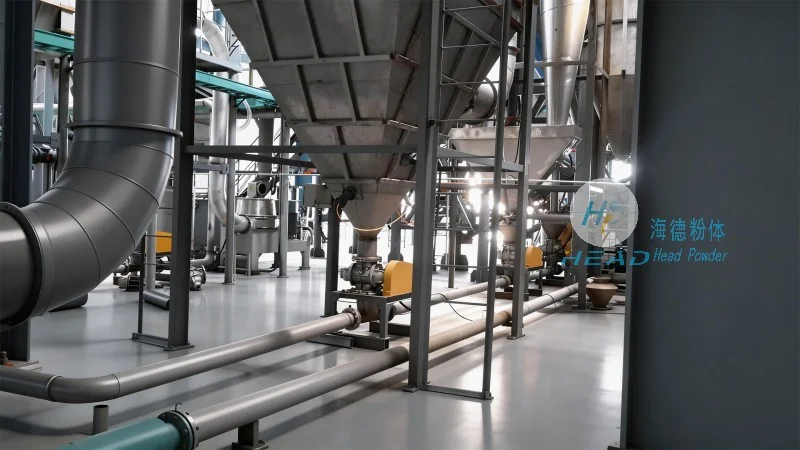
Principle of High-Alumina Fly Ash Powder Pneumatic Conveying
The core principle of pneumatic conveying for high-alumina fly ash powder is based on generating a pressure differential or vacuum within the conveying line. This differential causes the air to flow, entraining the powder particles as it moves. The system can operate in either pressure or vacuum mode, depending on the application and the distance the material needs to be transported. In pressure systems, a blower or compressor generates air pressure at the inlet, pushing the powder through the pipeline. In vacuum systems, a vacuum pump creates a negative pressure at the outlet, drawing the powder from the source. The design of the conveying system—including the type of air nozzle, pipeline diameter, and length—is crucial to ensure optimal performance and minimize pressure drop and material degradation.
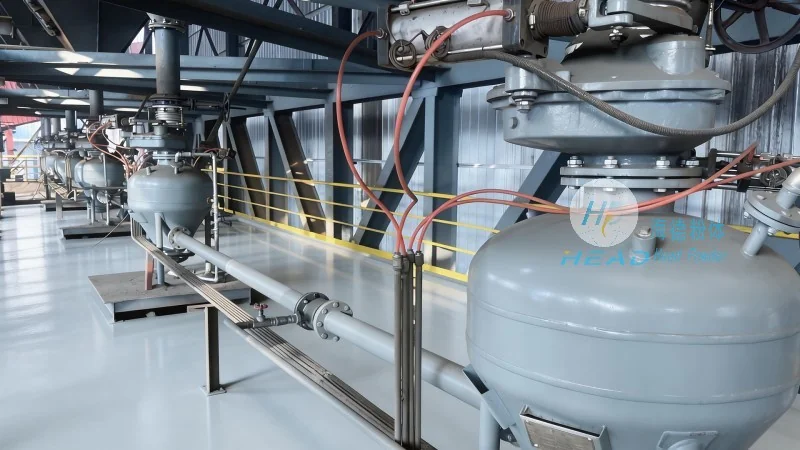
Working Scene Characteristics of High-Alumina Fly Ash Powder Pneumatic Conveying
The working scene characteristics of high-alumina fly ash powder pneumatic conveying are tailored to meet the demands of various industrial environments. These characteristics include high conveying efficiency, allowing for large volumes of powder to be transported over considerable distances with minimal energy consumption. The system is also characterized by its ability to handle abrasive materials like high-alumina fly ash without excessive equipment wear. This is achieved through the use of robust materials for the pipeline and components, such as stainless steel or special alloys, which resist corrosion and wear from the abrasive particles. Additionally, the pneumatic conveying system provides a closed-loop operation, helping to control dust emissions and maintain a clean working environment, which is crucial in industrial settings where air quality is a concern.
Application Scenarios and Operational Advantages
High-alumina fly ash powder pneumatic conveying is widely used in industrial applications like cement production, concrete manufacturing, and refractory material production. In cement plants, for example, the system transports fly ash from storage silos to mixing and grinding units, ensuring a consistent supply. The operational advantages in these scenarios include reduced labor costs from automated handling, improved safety by eliminating manual powder handling, and enhanced process control through precise dosing and flow monitoring. The system also contributes to energy savings by minimizing the need for mechanical conveyors and reducing the overall equipment footprint.
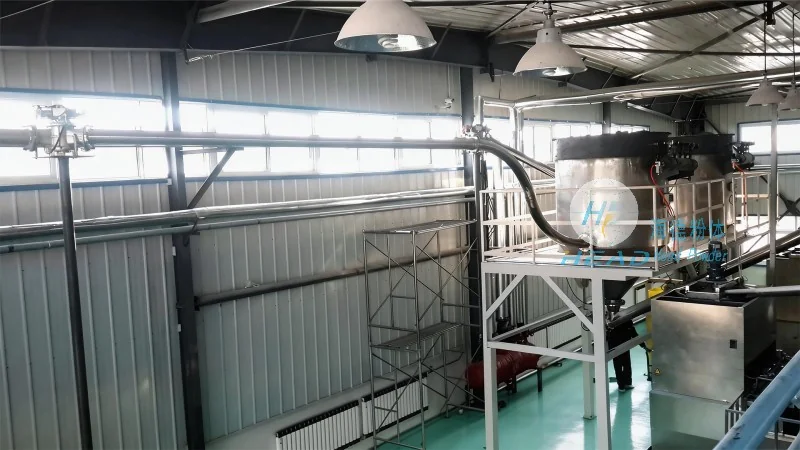
Company Profile: Shandong HeadPowder Engineering Co., Ltd.
Shandong HeadPowder Engineering Co., Ltd., known as HeadPowder, is a leading provider of advanced powder handling solutions, including pneumatic conveying systems for high-alumina fly ash. With a focus on innovation and customer-centric design, HeadPowder specializes in developing customized solutions to meet unique industrial requirements. The company is headquartered in Shandong, China, and has built a strong reputation for delivering reliable, efficient, and cost-effective equipment. HeadPowder's expertise in material handling technology ensures their pneumatic conveying systems are optimized for high-alumina fly ash characteristics, such as particle size distribution, density, and abrasiveness. This expertise allows the company to provide tailored solutions that enhance system performance and longevity, ultimately benefiting clients through operational efficiency and cost reduction.




