HeadPowder, a leading manufacturer based in Shandong, China, specializes in the design and production of advanced pneumatic conveying systems tailored for crystal particle handling. This article delves into the operational workflow and technical principles behind these systems, providing a comprehensive understanding for industry professionals.
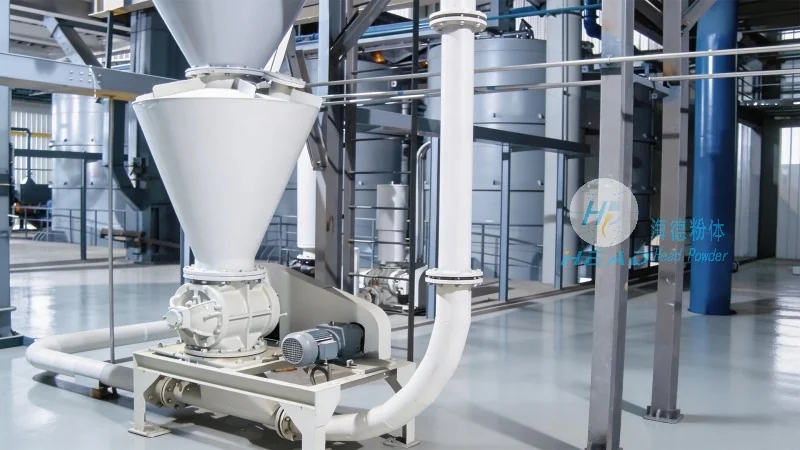
Overview of Pneumatic Conveying Systems for Crystal Particles
Pneumatic conveying equipment is engineered to transport fine or bulk crystal particles through a pipeline using compressed air or other gas streams. The system integrates several key components, including a hopper for material storage, a feeder to control discharge rate, a conveying line, and a receiver for product collection. Each component plays a critical role in ensuring efficient and reliable material transport, minimizing product degradation and operational downtime.
Key Components and Their Functions
The core components of a crystal particle pneumatic conveying system include the material hopper, which stores the crystal particles and maintains a consistent feed. The feeder, typically a rotary valve or screw feeder, regulates the flow rate to match the conveying requirements. The conveying line, often made of stainless steel or other corrosion-resistant materials, is designed to withstand the abrasive nature of crystal particles. The receiver, equipped with a dust collection system, collects the conveyed material and ensures environmental compliance. Additionally, the system may incorporate a filter and a pressure regulator to maintain optimal air pressure and prevent particle loss.
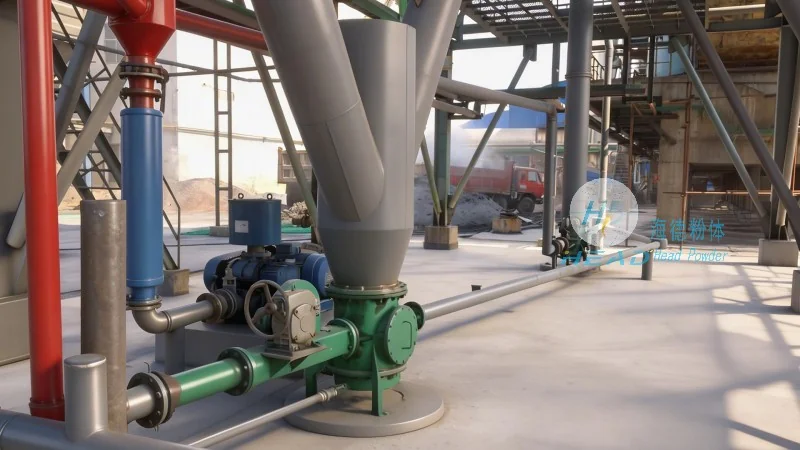
Operation Process: Step-by-Step Workflow
The operation of a crystal particle pneumatic conveying system follows a systematic process. Initially, the crystal particles are loaded into the hopper. The feeder then controls the discharge rate, feeding the particles into the conveying line. Compressed air is introduced at the inlet of the line, creating a flow that propels the particles through the pipeline. The particles are carried by the air stream, with the velocity and pressure maintained to prevent blockages or degradation. As the material travels through the line, it reaches the receiver, where the air is separated from the particles. The air is then filtered and discharged, while the crystal particles are collected in the receiver for further processing or packaging.
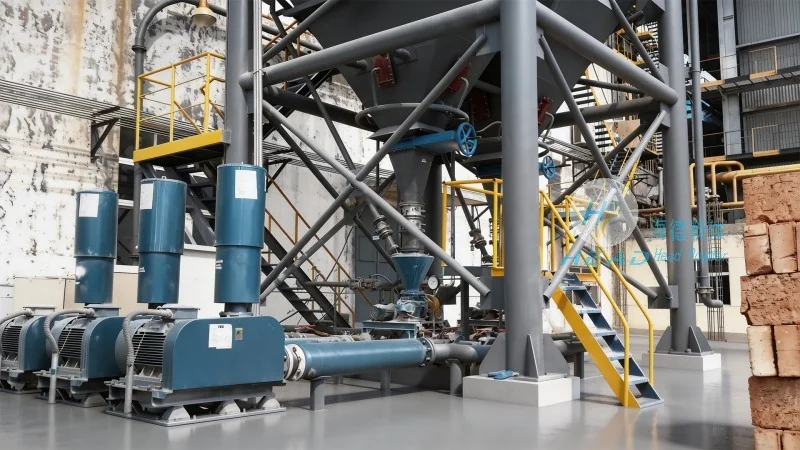
Working Principle: Fluidization and Particle Transport
The working principle of pneumatic conveying for crystal particles relies on the concept of fluidization, where the gas flow creates a suspension of particles within the conveying line. The air velocity must be sufficient to overcome the gravitational forces acting on the particles and the friction within the pipeline. This velocity is carefully controlled to ensure that the particles remain suspended without settling or causing blockages. The system uses positive pressure or negative pressure (air suction) to move the material, with positive pressure being more common for long-distance or high-capacity applications. The pressure differential between the hopper and the receiver drives the material flow, maintaining a continuous and stable transport process.
Advantages and Applications in Industrial Settings
Pneumatic conveying systems for crystal particles offer several advantages over traditional mechanical conveying methods. These include reduced product contamination, as the material is not in direct contact with metal surfaces, and lower risk of dust explosions due to enclosed systems. The systems are also highly flexible, allowing for vertical, horizontal, or mixed (upward and horizontal) conveying configurations. Industrial applications include pharmaceuticals, food processing, chemical manufacturing, and mining, where the transport of fine or abrasive crystal particles requires precision and reliability. HeadPowder's systems are designed to meet the specific needs of these industries, ensuring compliance with safety and quality standards.




