Shandong HeadPowder Engineering Co., Ltd., headquartered in Shandong, China, is a prominent manufacturer specializing in advanced pneumatic conveying systems for lithium carbonate processing. The lithium carbonate pneumatic conveying system is a sophisticated piece of equipment designed to efficiently transfer lithium carbonate from storage silos or hoppers to processing units, such as mixers or reactors, in the battery manufacturing sector. This system plays a crucial role in maintaining the continuity of production by ensuring a steady and reliable flow of raw material, which is essential for high-quality battery production.
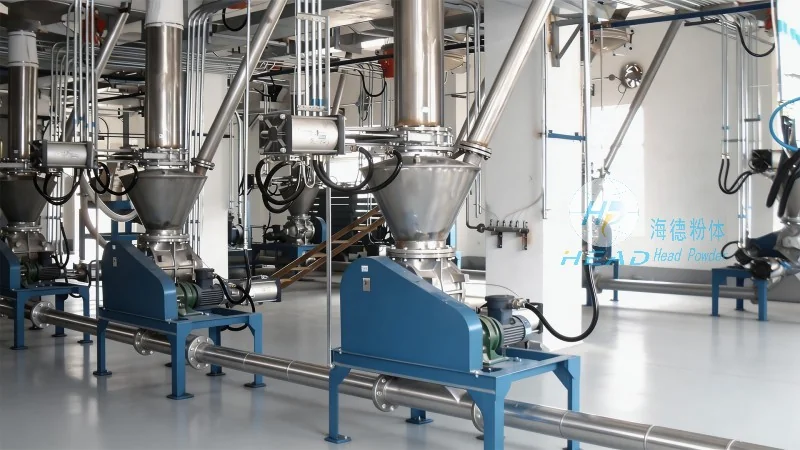
Key Components and Their Functions
The lithium carbonate pneumatic conveying system comprises several critical components, each with a specific function to ensure optimal performance. The primary components include a storage hopper or silo, which holds the lithium carbonate material; a rotary airlock valve or feeder, which controls the material discharge rate and prevents backflow; a blower or air compressor, which generates the necessary air pressure to move the material; a conveying pipeline, typically made of stainless steel or other corrosion-resistant materials to handle the chemical properties of lithium carbonate; and a receiving vessel or silo at the destination, where the material is deposited. Additionally, the system may include a filter or separator to remove any air contaminants and a pressure regulator to maintain consistent pressure levels throughout the conveying process.
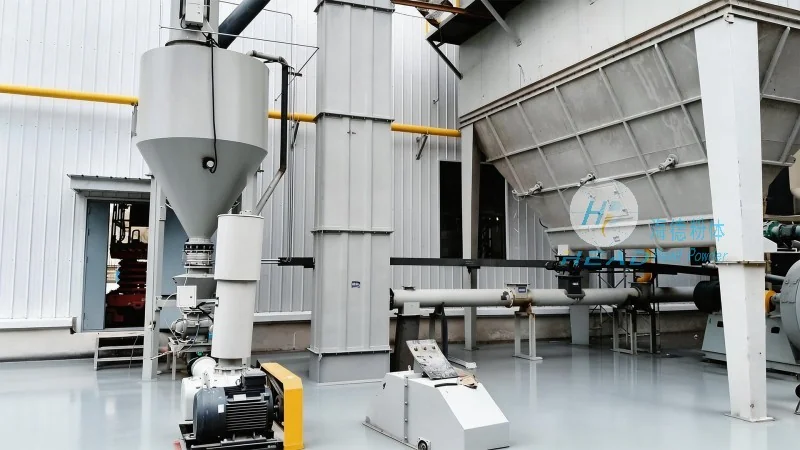
Step-by-Step Operation Process
The operation of the lithium carbonate pneumatic conveying system follows a systematic sequence to ensure smooth material transfer. First, the lithium carbonate is stored in the hopper or silo. The rotary valve then opens to allow a controlled amount of material to enter the conveying line. Simultaneously, the blower starts operating, creating a positive pressure in the pipeline. The high-pressure air stream picks up the lithium carbonate particles and transports them through the pipeline to the receiving vessel. The system maintains a consistent air flow rate and pressure to prevent material clogging or air leakage, which could disrupt the conveying process. The receiving vessel collects the material, and the system continues to operate until the desired quantity is transferred. The entire process is automated, with sensors and controls monitoring the flow rate and pressure to adjust the operation as needed.
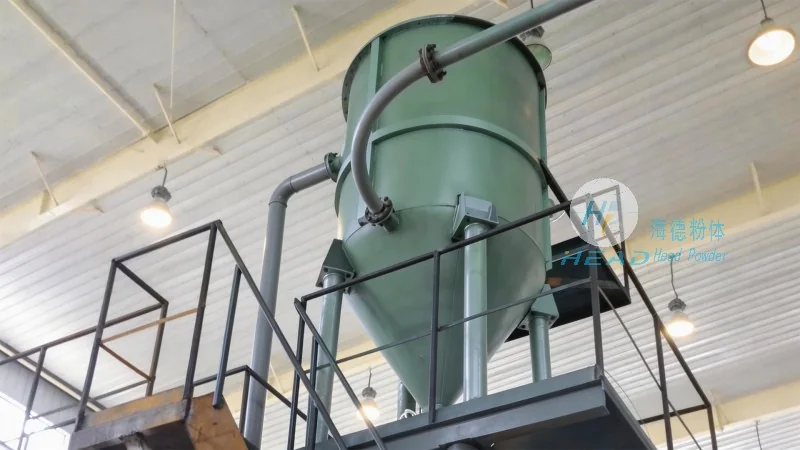
Working Principle Explained
The working principle of the lithium carbonate pneumatic conveying system is based on the principle of pneumatic transport, where compressed air is used to move solid particles. The system operates by creating a pressure differential between the source and destination. The blower provides the necessary air pressure, which can be either positive (for conveying from a lower to higher elevation) or negative (for conveying from a higher to lower elevation). The air stream entrains the lithium carbonate particles, forming a slurry-like mixture that moves through the pipeline. The velocity of the air stream is critical; it must be sufficient to overcome the gravitational force and frictional resistance of the material particles. The system can use either dense phase or dilute phase conveying. Dense phase conveying involves a higher air-to-material ratio, resulting in a slower but more stable transport, which is suitable for materials that are prone to degradation or require gentle handling. Dilute phase conveying uses a lower air-to-material ratio, allowing for faster transport but with a higher risk of material attrition. The choice between these two methods depends on the specific characteristics of the lithium carbonate and the application requirements.
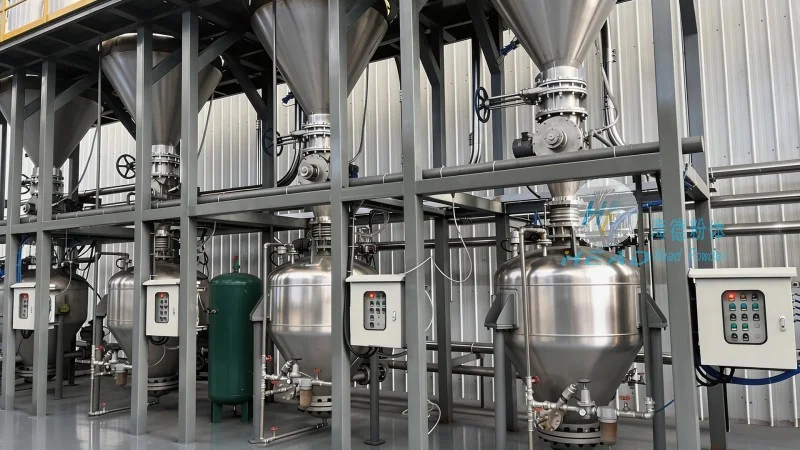
Advantages and Practical Applications
The lithium carbonate pneumatic conveying system offers several advantages over traditional mechanical conveying methods. It eliminates the need for mechanical components like conveyor belts, buckets, or screw conveyors, reducing maintenance costs and the risk of material contamination. The system is also highly flexible, allowing for changes in the material flow direction or destination without significant modifications to the infrastructure. In the battery industry, this system is widely used for transporting lithium carbonate from raw material storage to mixing and processing units, ensuring a continuous and efficient production line. The system's ability to handle large volumes of material in a compact space makes it ideal for industrial applications where space is limited. Additionally, the system can be integrated with other processing equipment, such as mixers or reactors, to form a complete production line, enhancing overall operational efficiency.




