Shandong HeadPowder Engineering Co., Ltd. specializes in the design, manufacturing, and installation of advanced pneumatic conveying systems tailored for the synthetic rubber industry. Based in Shandong, China, the company leverages decades of experience to deliver efficient, reliable, and cost-effective solutions for material handling challenges in rubber processing facilities.
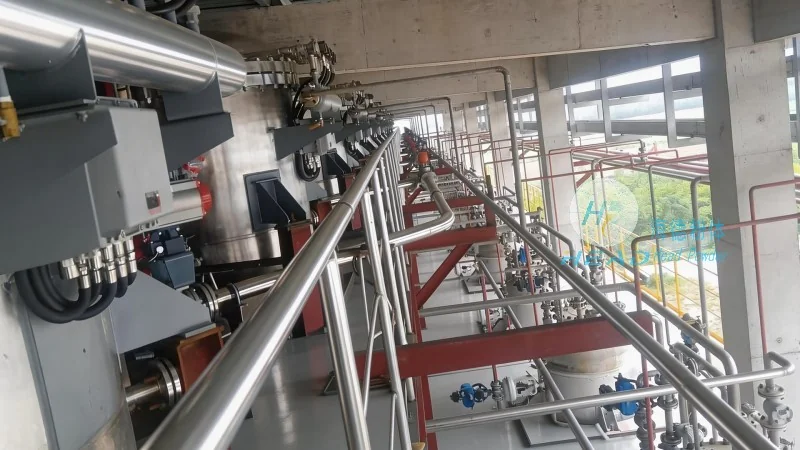
Overview of Synthetic Rubber Pneumatic Conveying Systems
A synthetic rubber pneumatic conveying system is a sophisticated piece of industrial equipment designed to transport rubber granules, powders, or other particulate materials through an enclosed pipeline using compressed air or other gas. The system integrates various components, including a feeding hopper, airlock, conveying line, and control unit, to ensure seamless material transfer from the source to the destination. This technology offers significant advantages over traditional mechanical conveying methods, such as reduced equipment wear, lower maintenance costs, and improved safety by eliminating the need for moving parts in the material path.
Key Components and Their Functions
The synthetic rubber pneumatic conveying system comprises several critical components, each playing a vital role in the overall operation. The feeding hopper is responsible for storing and metering the synthetic rubber material, ensuring a consistent flow rate. The airlock, typically a rotary or sliding valve, acts as a seal to prevent air leakage and maintain system pressure. The conveying line, made of durable materials like stainless steel or special polymers, transports the rubber particles under pressure. The control unit manages the system's operation, regulating air pressure, flow rates, and other parameters to optimize performance. Additionally, the system may include filters, cyclones, or dust collectors to maintain air quality and protect downstream equipment from contamination.
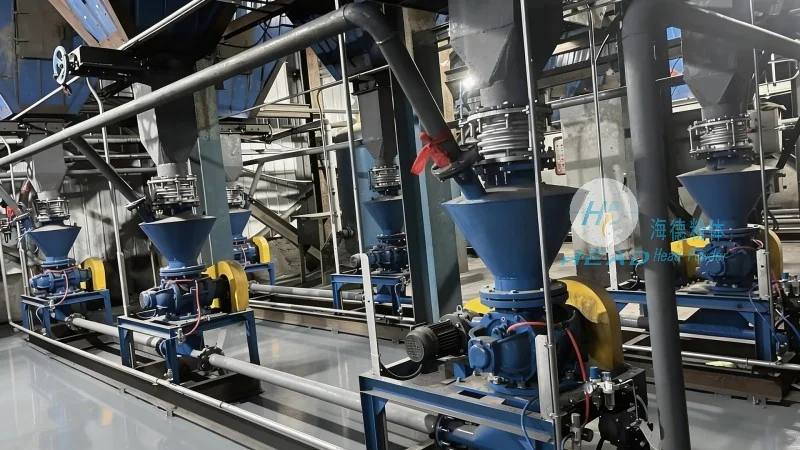
Operating Process: Step-by-Step Explanation
The operation of a synthetic rubber pneumatic conveying system follows a systematic sequence to ensure efficient material transfer. Initially, the synthetic rubber is fed into the hopper from the storage silo or processing line. The hopper's design, often equipped with a level sensor, monitors the material volume and triggers the feeding mechanism when the level drops below a set point. Simultaneously, the air compressor generates compressed air, which is then filtered and regulated to the required pressure. The compressed air is introduced into the conveying line, creating a pressure differential that propels the rubber particles forward. As the material travels through the pipeline, it may encounter bends, expansions, or reductions, which are carefully designed to minimize pressure loss and maintain flow stability. At the destination point, the rubber is discharged into a receiving hopper or storage tank. The airlock at the discharge end ensures that the material is released in controlled batches, preventing backflow and maintaining system pressure. The entire process is automated and monitored by the control unit, which adjusts parameters in real-time to adapt to changes in material flow or system conditions.
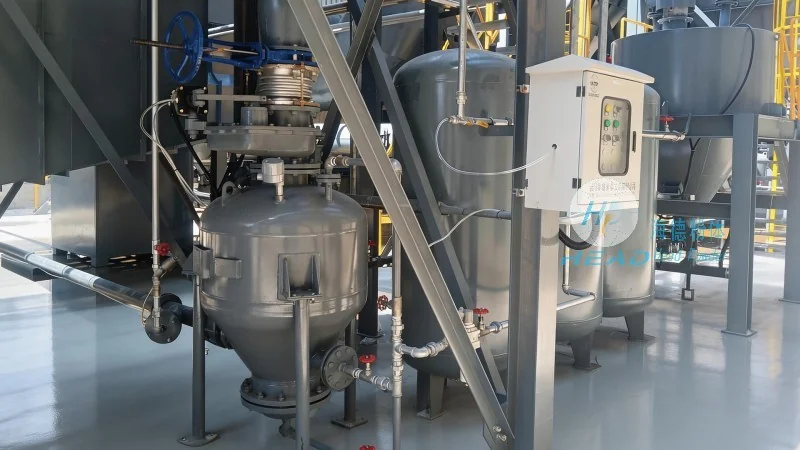
Working Principle: The Physics Behind Pneumatic Conveying
The working principle of a synthetic rubber pneumatic conveying system is based on the fundamental physics of fluid dynamics and particle motion. When compressed air is introduced into the conveying line, it creates a high-velocity airflow that entrains the rubber particles, forming a dense phase flow. The air velocity must be sufficient to overcome the gravitational force acting on the particles and the frictional resistance within the pipeline. The system operates in either dense phase or dilute phase mode, depending on the air-to-material ratio and the pipeline length. In dense phase conveying, the material is transported as a slurry-like mixture, which reduces particle impact and wear on the pipeline. This mode is particularly suitable for transporting abrasive or fragile synthetic rubber materials. In dilute phase conveying, the material is suspended in the air stream, allowing for higher flow rates and longer distances but with increased energy consumption. The control unit continuously adjusts the air pressure and flow rate to maintain the desired conveying mode and ensure optimal performance.
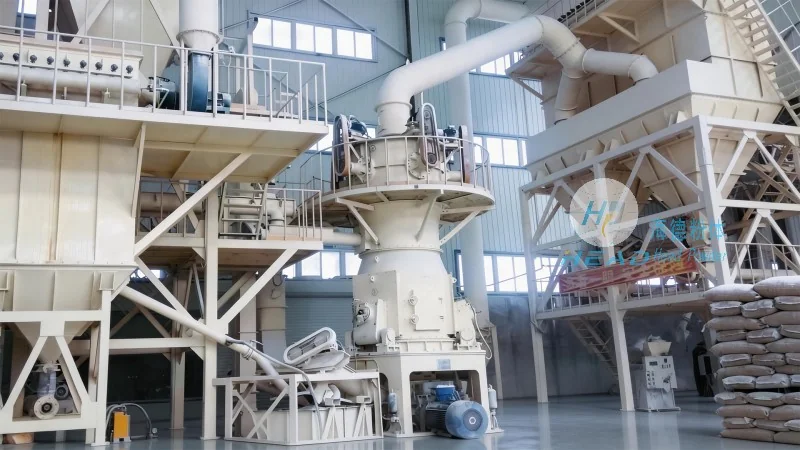
Advantages and Applications in the Synthetic Rubber Industry
Synthetic rubber pneumatic conveying systems offer numerous advantages that make them ideal for modern rubber processing facilities. These include reduced material degradation due to minimal contact with equipment surfaces, lower energy consumption compared to mechanical conveyors, and improved safety by eliminating the risk of material spillage or dust explosions. The systems are widely used in various applications, such as transporting rubber granules from storage to mixing equipment, conveying rubber powders for compounding, and moving finished rubber products from production lines to packaging areas. The flexibility of pneumatic conveying allows for integration with existing production lines and easy adaptation to changing production demands, making it a preferred choice for manufacturers seeking to enhance efficiency and productivity.
Maintenance and Operational Considerations
To ensure the long-term reliability and efficiency of a synthetic rubber pneumatic conveying system, regular maintenance and proper operational practices are essential. The system components, particularly the conveying line and airlock, require periodic inspection and cleaning to prevent blockages or wear. The air compressor and filters should be checked and serviced according to the manufacturer's recommendations to maintain optimal air quality and pressure. The control unit and sensors need to be calibrated regularly to ensure accurate monitoring and adjustment of system parameters. Additionally, operators should be trained to recognize and address common issues, such as pressure drops or material buildup, promptly to avoid system downtime. By following these maintenance guidelines and operational best practices, Shandong HeadPowder Engineering Co., Ltd. ensures that its customers can maximize the lifespan and performance of their synthetic rubber pneumatic conveying systems.




