For battery manufacturers, the efficient and reliable handling of positive electrode materials is crucial to production continuity and product quality. The pneumatic conveying system equipment developed by Shandong HeadPowder Engineering Co., Ltd. (hereinafter referred to as HeadPowder) provides a professional solution for the transportation of positive electrode materials, integrating advanced technology and robust design to meet the high demands of the battery industry.
Company Profile and Core Information
HeadPowder, a leading enterprise in the field of powder processing and conveying systems, is headquartered in Shandong, China. The company specializes in the research, development, and manufacturing of pneumatic conveying equipment tailored for various industrial applications, including the battery industry. With a focus on innovation and customer-centric solutions, HeadPowder has established itself as a trusted partner for companies seeking efficient material handling solutions.
System Overview and Working Principle
The positive electrode material pneumatic conveying system is a closed-loop system that utilizes compressed air to transport fine powders, such as those used in lithium-ion batteries. The core principle of this system is to create a pressure differential between the material source and the destination, enabling the material to be conveyed through a network of pipes without direct contact with mechanical components. This approach not only ensures a clean and dust-free environment but also minimizes material degradation and contamination.
Key Components and Their Functions
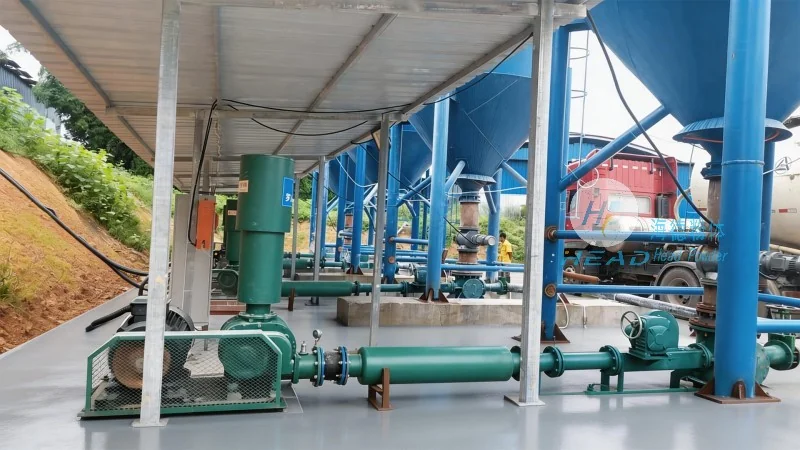
The system typically consists of several key components, each playing a critical role in the overall operation. These include the material feeding unit, the air supply system, the conveying pipeline network, the separation and filtration unit, and the material receiving unit. Each component is designed to work in harmony to ensure smooth and efficient material transport.
Material Feeding Unit
The material feeding unit is responsible for the initial handling of the positive electrode material. It may include a hopper or a rotary valve to control the flow rate of the material into the system. For positive electrode materials, which are often sensitive to moisture and air exposure, the feeding unit is equipped with sealing mechanisms to prevent contamination and maintain material integrity. The unit ensures a consistent and controlled feed of material into the conveying system, which is essential for stable operation.
Air Supply System
The air supply system provides the necessary compressed air to generate the pressure differential required for material transport. The system includes an air compressor, air dryer, and filtration unit to ensure that the air used for conveying is clean and free from moisture and contaminants. The air compressor generates the required pressure, while the dryer and filters remove moisture and particulates that could affect the material quality or the performance of the conveying system. The air supply is typically regulated to maintain a consistent pressure, which is crucial for stable conveying rates.
Conveying Pipeline Network
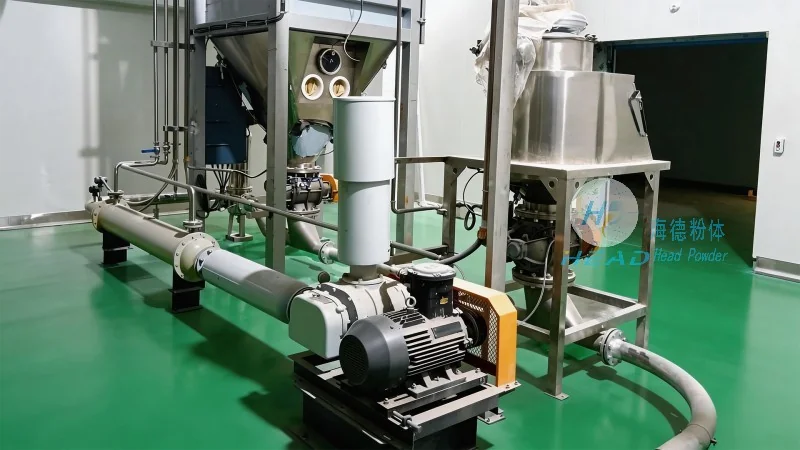
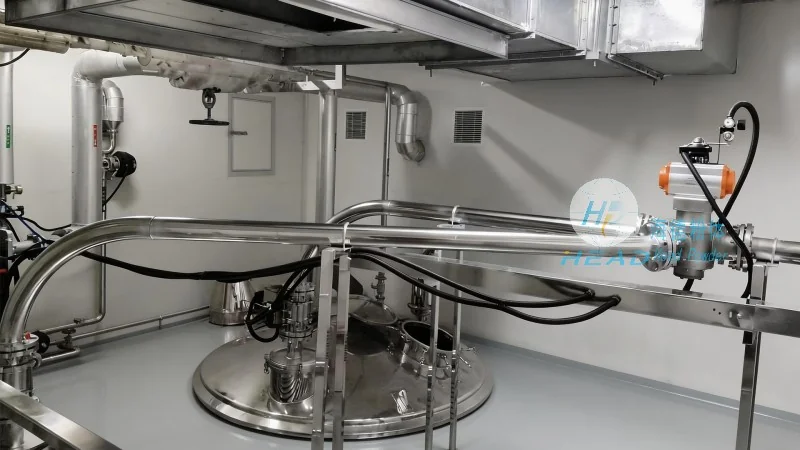
The conveying pipeline network is the backbone of the pneumatic conveying system, consisting of a series of pipes connected to the feeding and receiving units. The pipes are made of materials resistant to corrosion and wear, such as stainless steel or special polymers, to ensure durability and long service life. The design of the pipeline network takes into account the material's properties, such as particle size, density, and flow characteristics, to optimize the conveying efficiency. The system may include bends, elbows, and expansion joints to accommodate changes in direction and elevation, ensuring that the material can be transported smoothly without blockages or excessive pressure drops.
Separation and Filtration Unit
The separation and filtration unit is critical for maintaining the purity of the positive electrode material and protecting the downstream equipment. It typically includes a cyclone separator or a bag filter to remove any fine particles or dust from the air stream. The cyclone separator uses centrifugal force to separate larger particles from the air, while the bag filter captures smaller particles using fabric filters. The collected material is then returned to the system or disposed of as waste, depending on the process requirements. This unit ensures that the material remains clean and free from contaminants, which is essential for the quality of the final battery product.
Material Receiving Unit
The material receiving unit is the endpoint of the conveying system, where the positive electrode material is deposited. It may include a hopper or a storage tank designed to hold the material until it is used in the battery manufacturing process. The unit is equipped with level sensors and alarms to monitor the material level and prevent overfilling or underfilling. The receiving unit is also designed to be compatible with downstream equipment, such as mixers or coating machines, to ensure a seamless transition from conveying to processing.
Operation Process
The operation of the positive electrode material pneumatic conveying system follows a systematic process to ensure safe and efficient material transport. The steps typically include system startup, normal conveying operation, and system shutdown. Each step is carefully controlled to prevent accidents and ensure optimal performance.
System Startup Procedure
Before starting the system, all components must be checked for proper operation and safety. The air compressor is turned on first to build up the required pressure in the air supply system. The air dryer and filters are activated to ensure that the air is clean and dry. The material feeding unit is then started, and the material is fed into the system at a controlled rate. The conveying pipeline is pressurized, and the material begins to move through the system. The separation and filtration unit is activated to start capturing any particles from the air stream.
Normal Conveying Operation
During normal operation, the system maintains a consistent pressure and flow rate to transport the positive electrode material from the feeding unit to the receiving unit. The material is conveyed continuously, with the feeding rate adjusted as needed to match the demand of the downstream process. The system monitors key parameters, such as pressure, flow rate, and material level, to ensure that the operation remains stable. Any deviations from the normal operating conditions are detected by sensors and alarms, which trigger appropriate responses to maintain system safety and efficiency.
System Shutdown Procedure
When the system is to be shut down, the material feeding unit is stopped first to prevent any material from entering the system. The air compressor is then turned off to relieve the pressure in the air supply system. The conveying pipeline is depressurized, and the material is allowed to settle in the receiving unit. The separation and filtration unit is stopped, and the collected material is disposed of or returned to the system as needed. Finally, all components are checked for any residual material or damage before the system is considered fully shut down.
Advantages and Technical Features
The positive electrode material pneumatic conveying system offered by HeadPowder provides several advantages over traditional material handling methods. These include high efficiency, as the system can transport large quantities of material over long distances with minimal labor. The closed-loop design ensures a clean and dust-free environment, which is essential for maintaining the quality of sensitive materials like positive electrode powders. The system also offers flexibility, as it can be easily integrated with existing production lines and adapted to different material types and processing requirements. Additionally, the robust design and advanced control systems ensure high reliability and low maintenance costs, making it a cost-effective solution for battery manufacturers.
Application and Industry Impact
The pneumatic conveying system is widely used in the battery industry for the transportation of positive electrode materials, which are critical components of lithium-ion batteries. The system's ability to handle fine powders efficiently and safely has contributed to the growth and development of the battery industry, enabling manufacturers to produce high-quality batteries with consistent performance. By providing a reliable and efficient material handling solution, HeadPowder has helped many battery manufacturers improve their production efficiency and product quality, contributing to the advancement of the renewable energy and electric vehicle industries.




