For industrial applications involving the handling of potassium sulfate, the efficiency and reliability of material transport systems are critical. The pneumatic conveying line, specifically designed for potassium sulfate, offers a robust solution that integrates advanced engineering and operational principles. This article delves into the operation process and working principle of such a system, highlighting its key components, operational steps, and the technical advantages it provides in material handling.
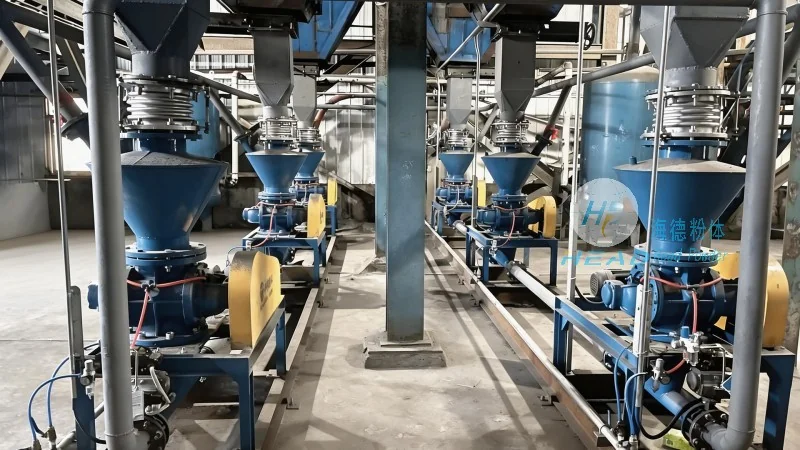
Introduction to Potassium Sulfate Pneumatic Conveying Systems
Potassium sulfate, a vital fertilizer and industrial chemical, requires specialized handling equipment to ensure safe and efficient transport. The pneumatic conveying line, developed by Shandong HeadPowder Engineering Co., Ltd., is engineered to meet the demanding requirements of bulk material transport in various industrial settings. This system combines the benefits of pneumatic transport—such as reduced dust exposure, minimal product degradation, and the ability to handle a wide range of particle sizes—with the reliability of mechanical systems.
Key Components of the Pneumatic Conveying Line
The potassium sulfate pneumatic conveying line consists of several core components that work in tandem to facilitate material transport. These components include the hopper, feeder, air compressor, conveying pipeline, dust collector, and control system. Each component plays a crucial role in the overall operation, ensuring smooth and continuous material flow.
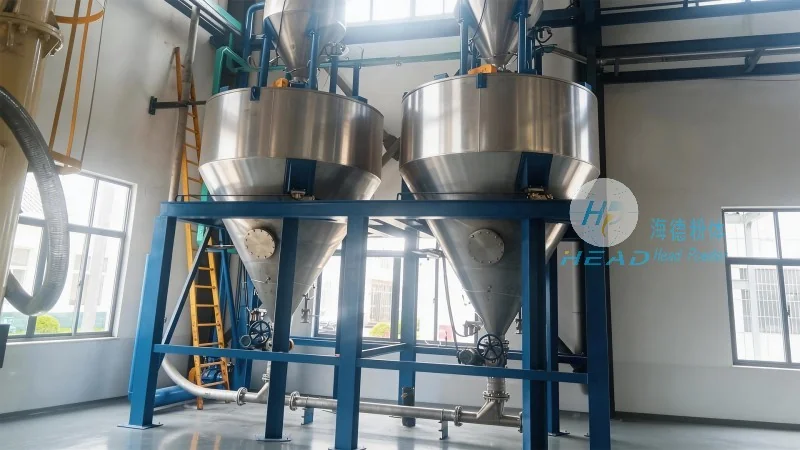
- Hopper: The hopper is the initial storage and feeding unit where potassium sulfate is loaded. It is designed to maintain a consistent material level and provide a controlled feed rate to the feeder.
- Feeder: The feeder, typically a rotary valve or screw feeder, regulates the flow of potassium sulfate from the hopper into the conveying pipeline. This component ensures a steady and uniform material feed, preventing blockages and maintaining system efficiency.
- Air Compressor: The air compressor generates the necessary air pressure to create the pneumatic flow within the pipeline. It is selected based on the material's properties, such as particle size and density, to ensure adequate air velocity for effective transport.
- Conveying Pipeline: The pipeline, usually made of stainless steel or other corrosion-resistant materials, transports the potassium sulfate particles suspended in the air stream. The design of the pipeline, including bends and elbows, is optimized to minimize pressure loss and maintain consistent air velocity.
- Dust Collector: The dust collector is integrated to capture any fine particles that may escape during the conveying process, ensuring compliance with environmental regulations and maintaining a clean working environment.
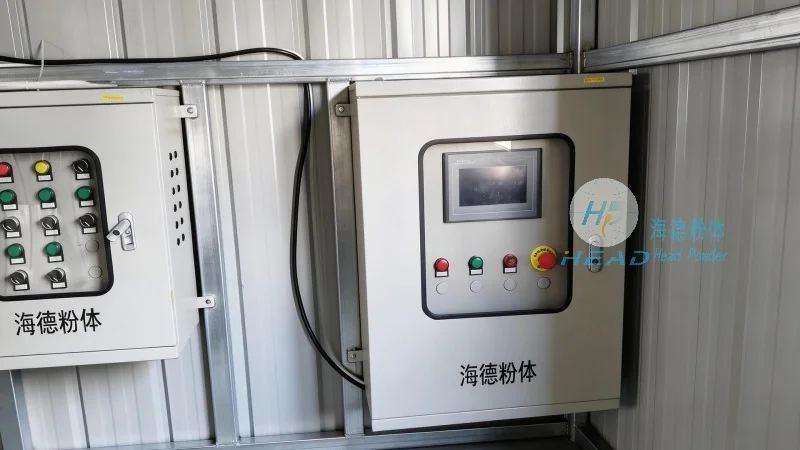
- Control System: The control system monitors and regulates the operation of all components, including the feeder speed, air compressor pressure, and dust collector performance. It provides real-time feedback and automatic adjustments to maintain optimal system performance.
Working Principle of the Pneumatic Conveying Line
The working principle of the potassium sulfate pneumatic conveying line is based on the principle of pneumatic transport, where material particles are suspended and transported by an air stream. The process begins with the material being fed from the hopper into the conveying pipeline through the feeder. Simultaneously, the air compressor supplies high-pressure air into the pipeline, creating a flow that lifts and transports the potassium sulfate particles.
As the air and material mixture moves through the pipeline, the particles are kept in suspension by the air velocity. The pipeline design, including the use of appropriate bends and straight sections, ensures that the air velocity remains above the minimum required to prevent particle settling. The dust collector is positioned at the end of the pipeline to capture any residual particles before the air is discharged.
The control system continuously monitors the pressure, flow rate, and material level, adjusting the feeder speed and air compressor output as needed to maintain stable operation. This closed-loop control ensures that the system operates efficiently, minimizing energy consumption and maximizing material throughput.
Operation Process of the Pneumatic Conveying Line
The operation process of the potassium sulfate pneumatic conveying line involves several sequential steps that ensure smooth and continuous material transport. The process begins with the preparation of the system, followed by the start-up sequence, material feeding, conveying, and finally, the shutdown and maintenance procedures.
1. System Preparation: Before starting the operation, the system is prepared by checking all components for proper installation and functionality. The hopper is filled with potassium sulfate, and the control system is set to the initial parameters. The air compressor is started, and the pressure is adjusted to the required level.




