For industries dealing with sand particles, efficient and reliable material handling is crucial. The pneumatic conveying system for sand particles, offered by Shandong HeadPowder Engineering Co., Ltd., is a specialized solution designed to meet the demands of modern sand processing applications. This system combines advanced engineering with robust construction to ensure optimal performance in transporting sand particles over various distances and conditions.
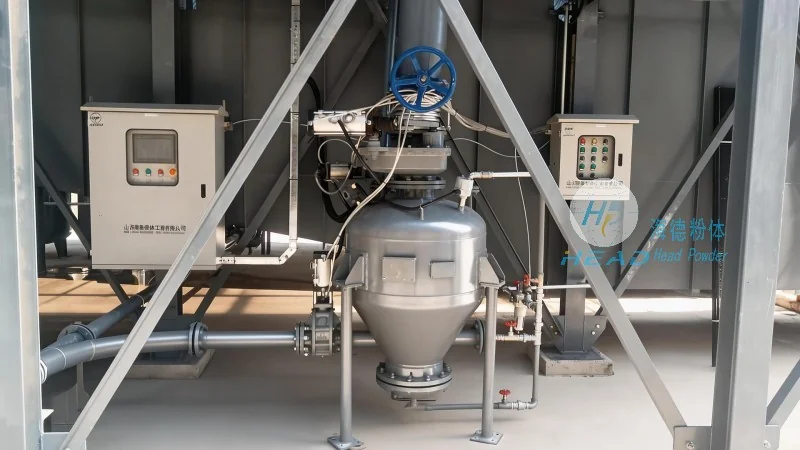
Overview of the Pneumatic Conveying System for Sand Particles
The pneumatic conveying system for sand particles is engineered to handle the unique characteristics of sand, such as its density, particle size, and flowability. By utilizing air as the conveying medium, this system eliminates the need for mechanical components like belts or buckets, reducing maintenance requirements and operational costs. The system is designed to be flexible, allowing for integration into existing production lines or as a standalone solution for sand handling needs.
Key Components and Structure of the System
The core components of the sand particle pneumatic conveying system include the hopper, feeder, air compressor, conveying line, and receiver. The hopper is used to store and feed the sand particles into the system, ensuring a consistent flow rate. The feeder, typically a rotary valve or screw feeder, controls the amount of sand entering the conveying line. The air compressor generates the necessary air pressure to move the sand particles through the pipeline. The conveying line, made of durable materials like stainless steel or plastic, transports the sand particles from the source to the destination. The receiver collects the sand particles at the end of the conveying line, completing the material transfer process.
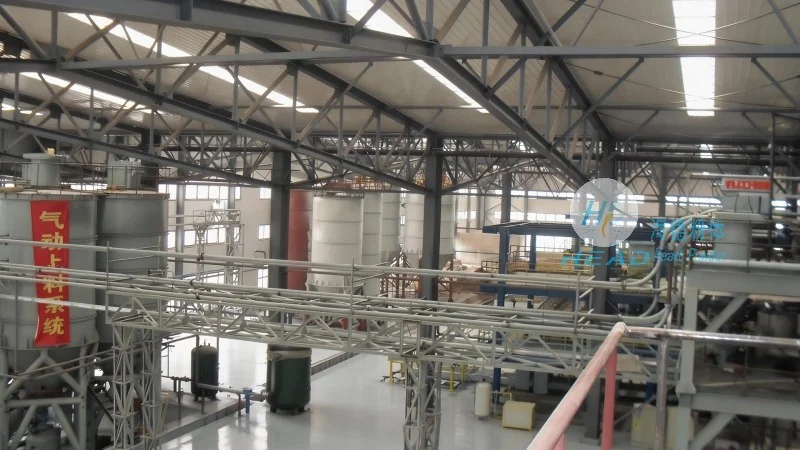
Working Principle of the Pneumatic Conveying System
The operation of the sand particle pneumatic conveying system relies on the principle of air flow to transport solid particles. When the air compressor starts, it generates high-pressure air that enters the conveying line. Simultaneously, the feeder releases sand particles into the line. The air flow carries the sand particles along the pipeline, maintaining a stable velocity to prevent particle deposition or blockage. The receiver at the end of the line collects the sand particles as the air pressure decreases, allowing the particles to settle and be discharged. This process is continuous and can be adjusted to handle varying sand volumes and particle sizes.
Advantages of the Sand Particle Pneumatic Conveying System
Compared to traditional mechanical conveying methods, the pneumatic system offers several advantages. First, it provides a dust-free environment, which is essential for maintaining product quality and worker safety in sand processing facilities. Second, the system is highly efficient, with minimal energy consumption and low maintenance costs. Third, it can handle a wide range of sand particle sizes and densities, making it versatile for different applications. Additionally, the system is compact and can be customized to fit specific space constraints, making it suitable for both new installations and retrofitting existing facilities.
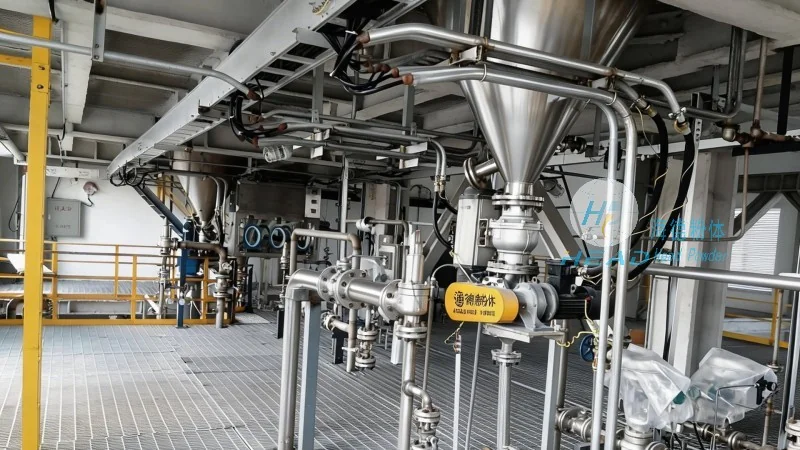
Applications and Industries
The sand particle pneumatic conveying system is widely used in various industries, including construction, mining, and manufacturing. In the construction industry, it is used to transport sand for concrete production and other building materials. In the mining sector, it helps in transporting sand from storage facilities to processing plants. The manufacturing industry also benefits from this system for handling sand in foundries and other production processes. The system's adaptability and efficiency make it a preferred choice for industries that require reliable and cost-effective sand handling solutions.
Customization and Installation
Shandong HeadPowder Engineering Co., Ltd. offers customized solutions tailored to the specific needs of each client. The company's engineers work closely with customers to design a system that meets their operational requirements, including the distance of transport, particle size, and flow rate. The installation process is straightforward, with the system being delivered as a complete package, ready for integration into the production line. The company provides comprehensive support, including installation, commissioning, and after-sales service, ensuring that the system operates at peak performance throughout its lifecycle.




