For industrial applications that require the efficient and reliable transport of dry powders and bulk materials, understanding the technology behind dry powder bulk material conveying lines is crucial. These systems are engineered to handle a wide range of materials, from fine powders to granules, ensuring safe and effective movement within processing facilities. The design principles of such lines are centered on optimizing material flow, minimizing product degradation, and maintaining operational efficiency.
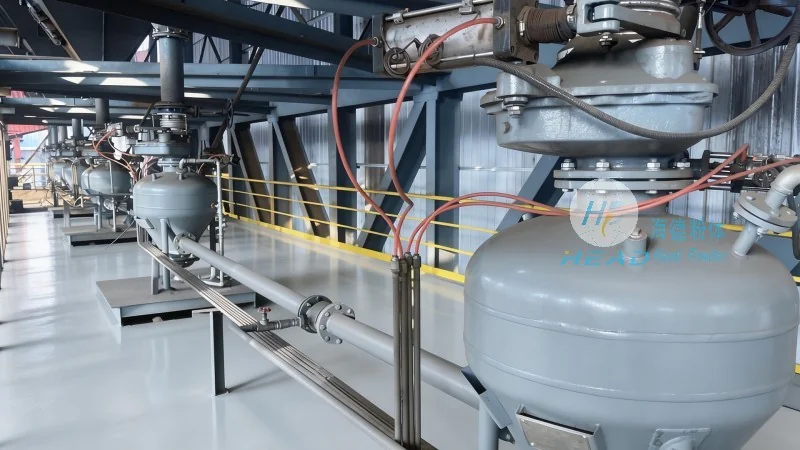
Understanding Dry Powder Bulk Material Conveying Lines
A dry powder bulk material conveying line is a specialized system designed to transport dry, free-flowing materials from one location to another within an industrial setting. These materials may include powders, granules, or other bulk solids that are typically non-Newtonian in nature, meaning their flow characteristics can vary with shear and pressure. The primary goal of these systems is to move materials without causing segregation, agglomeration, or degradation, which could compromise product quality or processing efficiency.
Key Components and Design Principles
The design of a dry powder bulk material conveying line involves several critical components, each playing a vital role in ensuring optimal performance. These components include feeders, conveyors, control systems, and dust collection equipment. The selection and integration of these components are based on several key design principles:
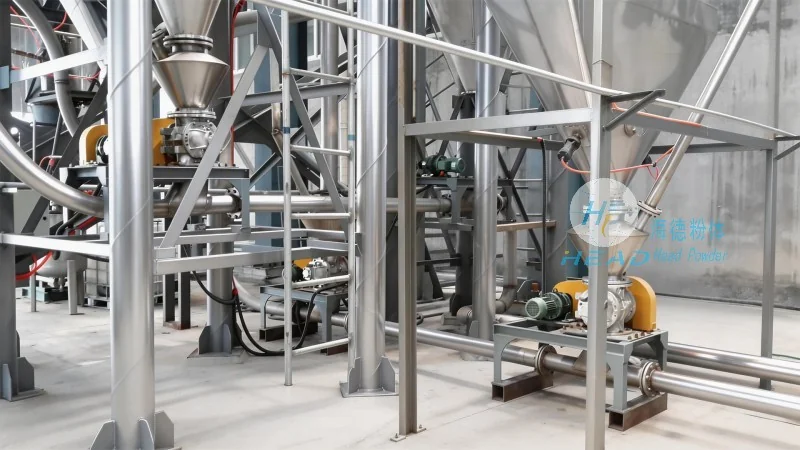
First, the system must ensure consistent and uniform material flow. This is achieved through the use of appropriate feeders, such as rotary valves or screw feeders, which regulate the rate of material discharge from storage silos or hoppers. The feeder's design is tailored to the specific characteristics of the material being handled, including its bulk density, flowability, and potential for bridging or caking.
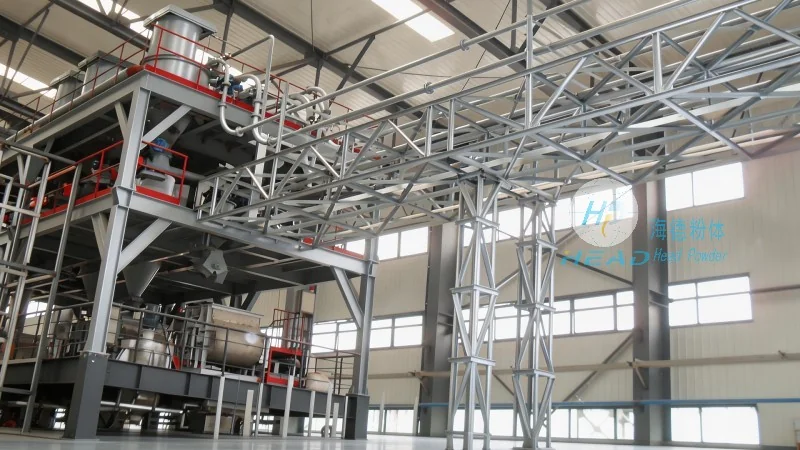
Second, the conveying method must minimize product degradation. Different conveying technologies, such as pneumatic conveying (air-assisted) or mechanical conveying (e.g., belt or screw conveyors), have varying impacts on material properties. Pneumatic systems, for example, use air to transport materials, which can be gentler on delicate powders but may require more energy and careful air management. Mechanical conveyors, on the other hand, use physical force to move materials and are often more suitable for heavier or more abrasive bulk solids.
Third, the system must address the challenges of dust control and environmental safety. Dry powder handling inherently generates dust, which can pose health risks and environmental hazards. Therefore, effective dust collection systems, such as cyclones or baghouse filters, are integrated into the design to capture and contain airborne particles. Additionally, the system may incorporate features like sealed hoppers and enclosed conveyors to prevent dust leakage and ensure compliance with occupational health and safety regulations.
Application-Specific Design Considerations
The design of a dry powder bulk material conveying line is not a one-size-fits-all solution; it must be tailored to the specific requirements of the application. Factors such as the material's physical properties, the distance and elevation changes required for transport, and the desired throughput rate all influence the system's configuration. For instance, a system transporting fine pharmaceutical powders may require a more gentle conveying method to avoid particle attrition, while a system handling coarse agricultural granules might prioritize high throughput and durability.
Furthermore, the integration of automation and control systems is increasingly important in modern conveying lines. These systems allow for real-time monitoring of material flow rates, pressure differentials, and system performance, enabling operators to adjust parameters dynamically and maintain optimal operation. This level of control not only improves efficiency but also enhances safety by preventing overloading or system failures.
Conclusion
In summary, a dry powder bulk material conveying line is a sophisticated system designed to efficiently transport dry, free-flowing materials while preserving product quality and ensuring operational safety. The design principles, which include optimizing material flow, minimizing degradation, and controlling dust, are achieved through the careful selection and integration of components such as feeders, conveyors, and dust collection equipment. By tailoring the system to the specific characteristics of the material and application, manufacturers can ensure reliable and efficient operation, supporting the overall productivity of industrial processes. As a leading provider in this field, Shandong HeadPowder Engineering Co., Ltd. specializes in designing and implementing such systems, leveraging years of experience to deliver customized solutions that meet the unique needs of clients across various industries.




