Pneumatic conveying technology is a key technology in modern industry for achieving efficient and safe material handling. For powdered material mixing pneumatic conveying lines, the core is to transport different types of powder raw materials to mixing equipment through pneumatic conveying devices, and achieve preliminary mixing during the conveying process, thereby laying the foundation for subsequent precise batching and mixing processes. Shandong HeadPowder Engineering Co., Ltd., as a professional provider of powder engineering solutions, is committed to offering efficient and reliable solutions for ingredient mixing powdered material pneumatic conveying lines to industrial clients.
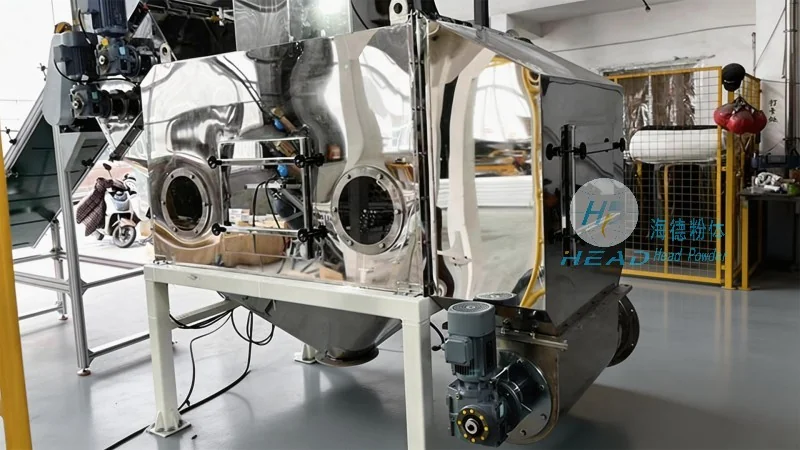
1. Basic Principle and System Composition of Pneumatic Conveying
Powdered material mixing pneumatic conveying lines typically consist of feeding devices, conveying pipelines, air source systems, mixing equipment, and control systems. The working principle is based on fluid mechanics, specifically pressure differences and gas flow characteristics. When the air source system supplies compressed air or inert gas into the conveying pipeline, the pressure inside the pipeline is higher than the ambient atmospheric pressure, forming a gas-solid two-phase flow. Powder materials enter the pipeline through the feeding device and are conveyed to the mixing equipment under the push of the gas flow. In this process, pneumatic conveying not only achieves material transport but also realizes preliminary mixing of powders through the stirring effect of the gas flow, improving material uniformity.
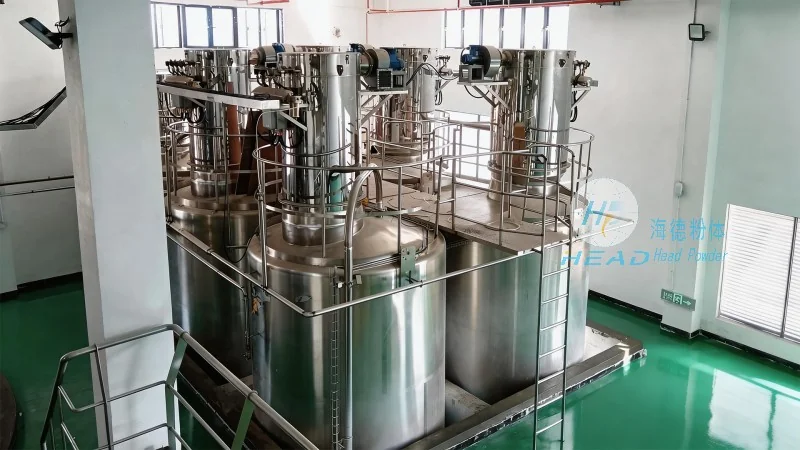
2. Key Control Factors in Batching and Mixing Processes
In the batching and mixing process of powdered material pneumatic conveying lines, ensuring stable material transport and uniform mixing is the core goal. Key control factors include air source pressure, gas flow velocity, powder flow rate, and pipeline layout. Proper setting of air source pressure is crucial for overcoming pipeline resistance and ensuring continuous material transport. The gas flow velocity needs to be optimized based on the physical properties of powders (such as density, particle size, and flowability). Excessive flow velocity may cause particle breakage or pipeline wear, while insufficient velocity can lead to blockages. The powder flow rate is controlled through the adjustment of feeding device valves or metering devices to ensure proportionate mixing of different raw materials. Additionally, the layout and design of pipeline components like bends and tees affect the uniformity of gas flow and material mixing. Reasonable pipeline design can reduce particle separation and stratification during transport.
3. Working Scene Characteristics: Adaptability in Industrial Applications
Powdered material mixing pneumatic conveying lines are widely used in industries such as chemicals, food, pharmaceuticals, and building materials. The characteristics and application needs vary across different working scenes. For example, in the chemical industry, materials with corrosiveness or flammability may be handled, requiring pneumatic conveying systems with corrosion-resistant materials or explosion-proof designs. In the food industry, high hygiene and cleanliness standards are required, with conveying equipment typically made of stainless steel and equipped with sterile operation interfaces to ensure product compliance with food safety standards. In the pharmaceutical industry, the purity and mixing uniformity of materials are extremely strict, requiring high-precision metering and mixing functions in pneumatic conveying systems while avoiding cross-contamination. For large-scale production scenarios, the degree of automation and control systems are crucial, with PLC or DCS systems used for real-time parameter monitoring and adjustment to ensure production efficiency and product quality consistency.
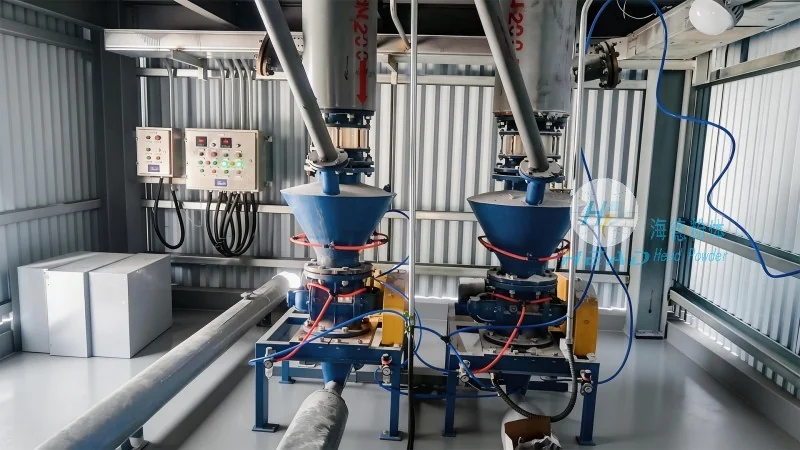
4. System Maintenance and Performance Optimization
To ensure the long-term stable operation of powdered material mixing pneumatic conveying lines, system maintenance and performance optimization are critical. Regular checks of the air source system's pressure and flow ensure it operates at optimal conditions. Cleaning of dust and blockages in the conveying pipelines prevents pipeline clogging. Inspection of the feeding device's sealing and metering accuracy prevents material leakage or measurement errors. Additionally, based on actual production needs, the system can be optimized through adjustments to gas flow velocity, pipeline layout optimization, or the adoption of new mixing equipment. This can improve conveying efficiency, reduce energy consumption, and extend equipment service life. Through scientific maintenance and optimization, powdered material mixing pneumatic conveying lines can continuously demonstrate their advantages of efficiency, safety, and environmental friendliness to meet the high requirements of modern industry for material handling.




