Principles and Application Scenarios of Pneumatic Conveying for Moisture - Containing Ammonium Nitra
Release time:2026-09-19 21:01:34
name of the company:Shandong Headpowder Engineering Co., Ltd.
telephone:156-6277-7102
contacts:Zhang manager
HeadPowder, a leading provider of industrial material handling solutions, specializes in the design and implementation of pneumatic conveying systems for challenging materials such as moisture - containing ammonium nitrate. This article explores the fundamental principles behind pneumatic conveying technology and highlights the key characteristics of its application scenarios, offering insights into how this method efficiently handles such materials in industrial settings.
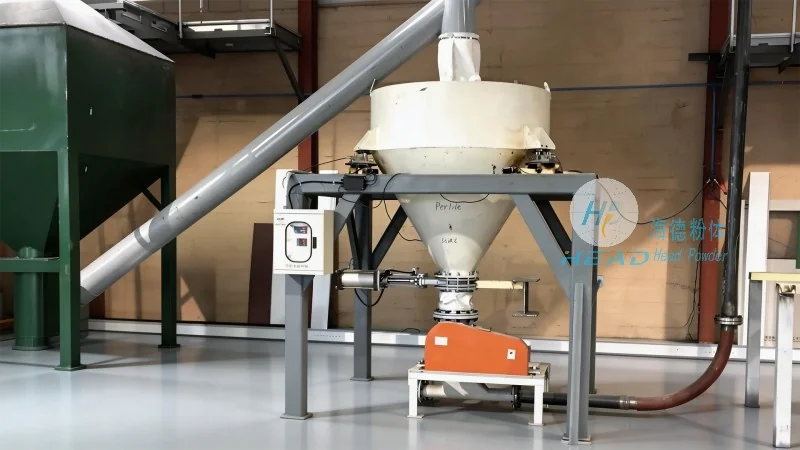
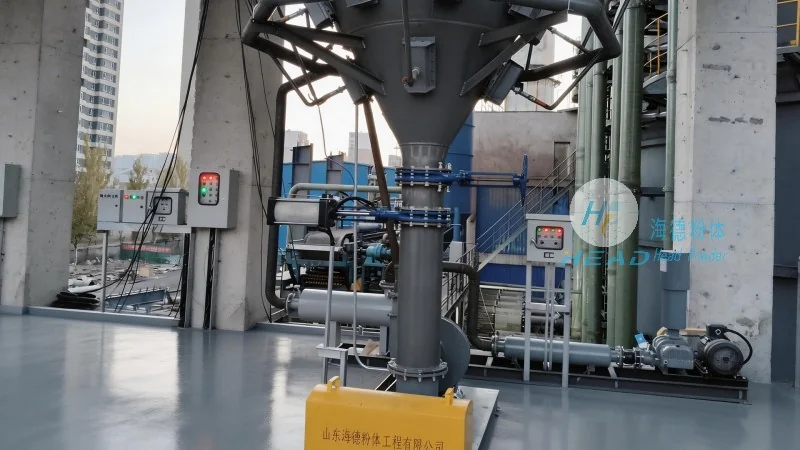
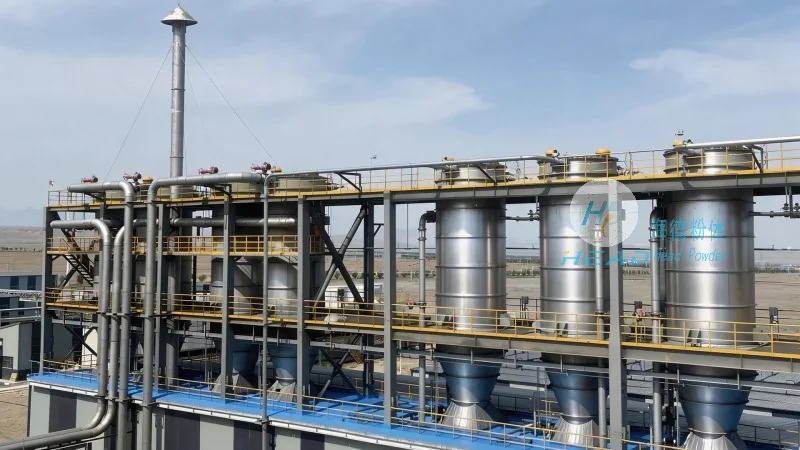
Principles of Pneumatic Conveying for Moisture - Containing Ammonium Nitrate
Pneumatic conveying is a method of transporting bulk materials through a pipeline using a stream of air or other gas. For moisture - containing ammonium nitrate, the process involves creating a flow of air that entrains the material particles, moving them from the source to the destination. The core principle is the balance between the air velocity and the material's properties, ensuring that the particles are carried without excessive wear or degradation. HeadPowder's systems are engineered to optimize this balance, utilizing appropriate air pressure, flow rates, and pipeline design to maintain the integrity of the ammonium nitrate while achieving efficient transport. The system typically includes a material feed hopper, a rotary airlock to control the flow of material into the pipeline, and a conveying line with appropriate diameter and length. The air is supplied by a blower or fan, and the velocity is carefully controlled to ensure that the ammonium nitrate particles are fully suspended and transported without clogging or damage. This approach not only ensures the material's quality but also enhances the overall efficiency of the conveying process.
Key Characteristics of Application Scenarios
The application scenarios for pneumatic conveying of moisture - containing ammonium nitrate are diverse and tailored to specific industrial needs. These scenarios often involve situations where traditional gravity or mechanical conveying methods are unsuitable due to the material's hygroscopic nature or the need for dust - free handling. For instance, in fertilizer production facilities, the material may need to be transferred from storage silos to processing units without moisture loss or contamination. In such cases, pneumatic conveying provides a closed - system solution that prevents exposure to the environment, maintaining product quality. Additionally, in emergency response or storage operations, the ability to quickly and safely move large volumes of ammonium nitrate is critical, and pneumatic systems offer rapid response capabilities with minimal human intervention. The technology is also applicable in scenarios where space constraints or the need for automated material handling are paramount, such as in integrated chemical plants or large - scale agricultural operations. By addressing these specific challenges, pneumatic conveying becomes an indispensable solution for industries dealing with moisture - containing ammonium nitrate.




