HeadPowder, or Shandong HeadPowder Engineering Co., Ltd., is a reputable company based in Shandong, China, specializing in the design, manufacturing, and installation of advanced pneumatic conveying systems. With a strong commitment to quality and innovation, HeadPowder has established itself as a key player in the industry, providing reliable solutions for bulk material handling across various sectors. The company's headquarters is located in Shandong, China, where it leverages local resources and expertise to deliver high-performance equipment tailored to meet the diverse needs of its clients.
Understanding Pneumatic Conveying Systems
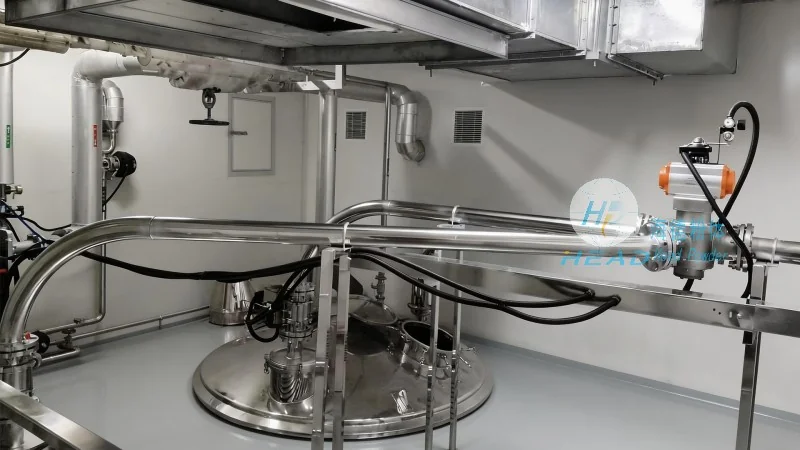
Pneumatic conveying lines are sophisticated systems used to transport bulk materials such as powders, granules, and fine particles through a pipeline using air or other gases. These systems are widely utilized in industries like pharmaceuticals, food processing, chemicals, and mining due to their efficiency, flexibility, and ability to handle a wide range of materials. The core components of a pneumatic conveying system typically include a material hopper, a feeder, a conveying pipeline, a control system, and a discharge unit. Each component plays a crucial role in ensuring the smooth and efficient operation of the entire system.
The Operation Process of Large-Scale Pneumatic Conveying Lines
The operation process of large-scale pneumatic conveying lines involves several sequential steps that ensure the material is transported from the source to the destination with minimal loss and maximum efficiency. The first step is material feeding, where bulk material is introduced into the system from a hopper or storage silo. The feeder, often a rotary valve or a mass flow feeder, regulates the flow rate of the material into the conveying pipeline. This step is critical as it controls the amount of material entering the system, preventing overloading or underfeeding that could lead to system inefficiencies.
Once the material is fed into the pipeline, the conveying phase begins. In this phase, the material is propelled through the pipeline by a high-pressure air or gas stream. The pressure differential between the inlet and outlet of the pipeline creates the necessary force to move the material. The conveying method can be classified into two main types: dilute-phase and dense-phase. Dilute-phase conveying uses low air velocity and high material concentration, while dense-phase conveying uses higher air velocity and lower material concentration to achieve a more controlled and gentle transport. The choice of conveying method depends on the characteristics of the material, such as particle size, density, and moisture content, as well as the required distance and throughput.
During the conveying process, the material may experience various forces, including drag, lift, and centrifugal forces, depending on the design of the pipeline and the type of conveying system. These forces ensure that the material remains suspended in the air stream and moves efficiently through the pipeline. The control system plays a vital role in regulating the air pressure, flow rate, and material feed rate to maintain optimal operation. Sensors and monitoring devices are often integrated into the system to detect any abnormalities, such as blockages or pressure drops, and trigger appropriate actions to prevent system failure.
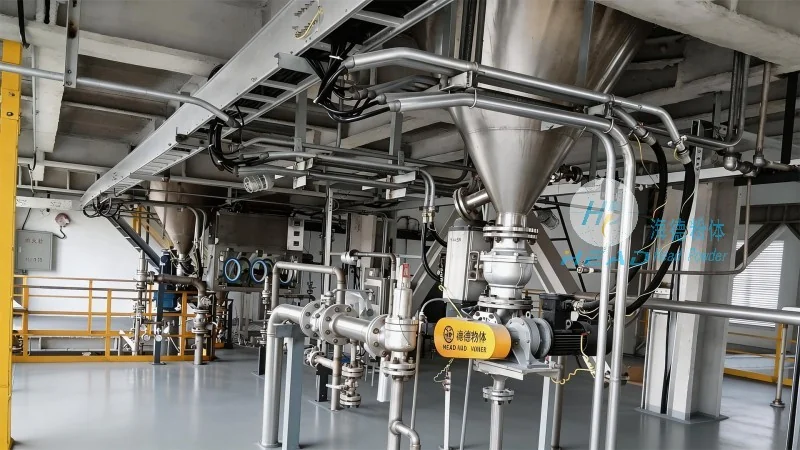
The final step in the operation process is material discharge. The material is discharged from the pipeline into a receiving hopper or storage container at the destination. The discharge unit, which may include a rotary valve or a pressure relief valve, controls the flow of material out of the system. Proper discharge is essential to prevent material buildup or spillage, ensuring a clean and efficient end-of-line operation. The entire process is typically automated, with the control system managing all aspects of the operation to minimize human intervention and maximize productivity.
Working Principle of Pneumatic Conveying Systems
The working principle of pneumatic conveying systems is based on the fundamental concept of using air or gas to transport bulk materials. The system operates by creating a pressure differential between the inlet and outlet of the conveying pipeline. This pressure differential generates a flow of air or gas that carries the material particles through the pipeline. The key to the system's efficiency lies in the balance between the air velocity and the material's properties. If the air velocity is too low, the material may settle and cause blockages. If the air velocity is too high, the material may be damaged or the system may become inefficient.
The material is introduced into the system from a hopper or storage silo and is fed into the pipeline by a feeder. The feeder ensures a consistent flow rate of material, which is crucial for maintaining the system's performance. The conveying pipeline is typically made of materials such as stainless steel or plastic, depending on the material being transported and the operating conditions. The pipeline is designed with bends and elbows to guide the material through the system, and the diameter of the pipeline is chosen based on the required throughput and material characteristics.
The control system is responsible for managing the air pressure and flow rate. It uses sensors to monitor the pressure and flow, and adjusts the system parameters to maintain optimal operation. The system may also include a filter or a dust collector to remove any particles that may be carried over from the conveying process, ensuring that the air leaving the system is clean and free from contaminants. The discharge unit at the end of the pipeline collects the material and directs it to the receiving container, completing the material transport process.
Key Components and Their Functions
Several key components are integral to the operation of large-scale pneumatic conveying lines. Each component plays a specific role in ensuring the system functions efficiently and reliably. The material hopper is the initial storage container where bulk material is stored before being fed into the system. It is designed to hold a large quantity of material and provide a consistent feed to the feeder. The hopper is typically equipped with a level sensor to monitor the material level and alert the system when it is low.
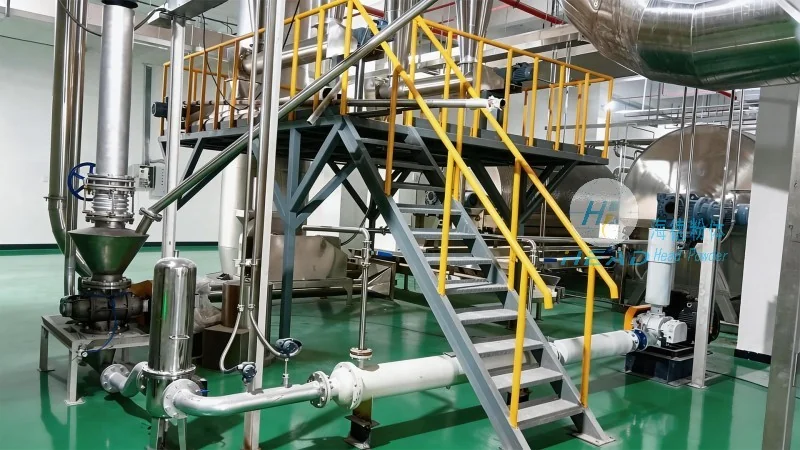
The feeder is a critical component that regulates the flow rate of material into the conveying pipeline. There are several types of feeders, including rotary valves, mass flow feeders, and vibratory feeders. Rotary valves are commonly used for dry powders and granules, as they provide a controlled and consistent flow. Mass flow feeders are used for materials that are prone to bridging or caking, as they ensure a uniform flow regardless of the material's properties. Vibratory feeders are used for materials that are difficult to feed, such as sticky or cohesive powders, as they use vibration to break up the material and ensure a smooth flow.
The conveying pipeline is the main channel through which the material is transported. The diameter and length of the pipeline are determined based on the required throughput and the distance between the source and destination. The pipeline is typically made of stainless steel or plastic, depending on the material being transported and the operating conditions. The pipeline is designed with bends and elbows to guide the material through the system, and the angle of the bends is optimized to minimize pressure loss and prevent material deposition.
The control system is responsible for managing the air pressure and flow rate. It uses sensors to monitor the pressure and flow, and adjusts the system parameters to maintain optimal operation. The system may also include a filter or a dust collector to remove any particles that may be carried over from the conveying process, ensuring that the air leaving the system is clean and free from contaminants. The discharge unit at the end of the pipeline collects the material and directs it to the receiving container, completing the material transport process.
Advantages of Large-Scale Pneumatic Conveying Lines
Large-scale pneumatic conveying lines offer several advantages over traditional material handling methods. One of the primary advantages is their ability to transport materials over long distances with minimal loss and maximum efficiency. The system can handle a wide range of materials, including powders, granules, and fine particles, without causing contamination or degradation. Another advantage is the flexibility of the system, as it can be easily adjusted to accommodate changes in material flow rate or destination. The system is also relatively compact and can be installed in confined spaces, making it suitable for various industrial applications.




