HeadPowder, a leading provider of industrial conveying solutions, specializes in the design, manufacturing, and installation of water-containing powder pneumatic conveying lines. This article delves into the operational process and underlying principles of such systems, highlighting their efficiency and reliability in handling fine powders.
Introduction to Water-Containing Powder Pneumatic Conveying
Water-containing powder pneumatic conveying systems are advanced technologies used to transport dry powders through a pipeline using a combination of air and water as the conveying medium. Unlike traditional pneumatic conveying that relies solely on air, these systems incorporate water to enhance the transport efficiency, especially for fine or cohesive powders that are difficult to handle with conventional methods. The integration of water helps in reducing particle segregation, improving flowability, and minimizing dust emissions, making them ideal for applications in industries like food, pharmaceuticals, chemicals, and minerals.
Key Components of the System
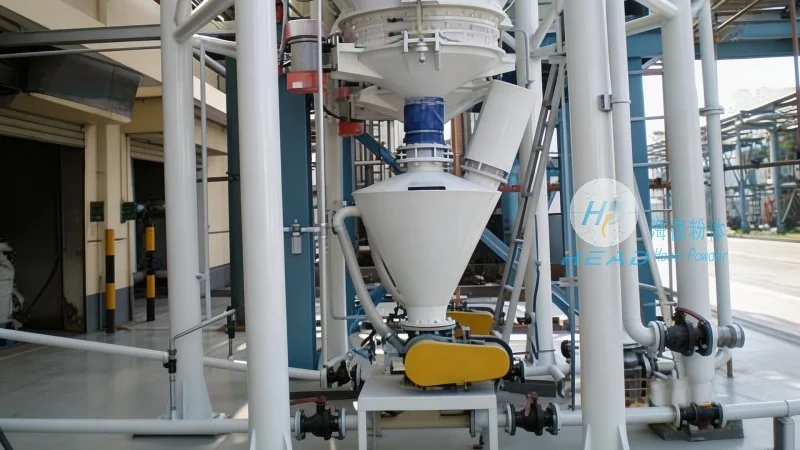
The water-containing powder pneumatic conveying line typically consists of several critical components that work in tandem to ensure smooth operation. These include the material hopper, which serves as the storage and feeding unit; the water injection system, responsible for adding the necessary amount of water to the powder; the air compressor or blower, which generates the airflow to move the mixture; the pipeline network, which transports the powder-water mixture from the source to the destination; and the separation and drying equipment, which separates the powder from the water and dries it to the required moisture level before discharge.
Working Principle of the Conveying Process
The operation of a water-containing powder pneumatic conveying line begins with the loading of the dry powder into the material hopper. The powder is then fed into the pipeline through a feeder, such as a rotary valve or a screw feeder, which controls the flow rate. Simultaneously, water is introduced into the system via the water injection system, typically at the inlet of the pipeline. The air compressor then generates a high-pressure airflow that mixes with the water and the powder, creating a slurry-like mixture. This mixture is then propelled through the pipeline by the air pressure, traveling to the destination point, such as a silo, storage tank, or processing unit.
Operation Process: Step-by-Step
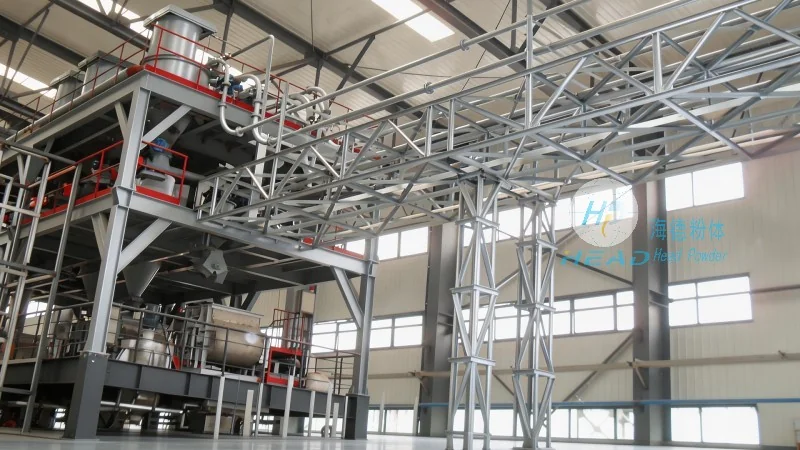
1. Material Loading and Preparation: The dry powder is loaded into the material hopper, ensuring a sufficient quantity for the conveying task. The hopper is equipped with a level indicator to monitor the powder level, and a feeder is set to control the discharge rate.
2. Water Injection and Mixing: Water is pumped into the pipeline at a controlled rate, typically adjusted based on the powder's characteristics and the desired conveying efficiency. The water helps to wet the powder particles, reducing friction and improving the flowability of the mixture.
3. Air Compression and Conveying: The air compressor generates a steady airflow that carries the water-powder mixture through the pipeline. The pressure and flow rate are carefully regulated to maintain the desired velocity and prevent particle segregation or blockages.
4. Separation and Drying: At the receiving end, the mixture enters a separator, such as a cyclone or a filter, where the powder is separated from the water. The separated powder is then passed through a drying unit, such as a rotary dryer or a fluidized bed dryer, to reduce its moisture content to the required level before storage or further processing.
Advantages of Water-Containing Powder Pneumatic Conveying
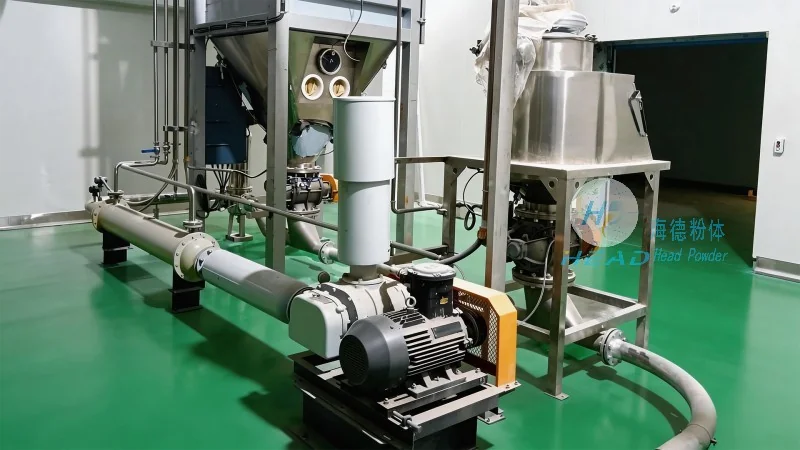
Water-containing powder pneumatic conveying systems offer several advantages over traditional methods. Firstly, they provide high conveying efficiency, even for fine or cohesive powders that are difficult to transport. The water helps to break down agglomerates and improve the flowability of the material, reducing the risk of blockages and ensuring consistent transport rates. Secondly, these systems are more hygienic and dust-free compared to other conveying methods, making them suitable for applications in the food and pharmaceutical industries where product purity is critical. Thirdly, they offer flexibility in terms of conveying distance and layout, as the pipeline can be designed to follow the plant's layout without the need for complex infrastructure. Lastly, the system is energy-efficient, as the water and air are used in a closed loop, minimizing waste and reducing operational costs.
Applications and Industries
Water-containing powder pneumatic conveying lines are widely used in various industries due to their versatility and efficiency. In the food industry, they are used to transport powders like flour, sugar, and milk powder, ensuring that the products remain fresh and free from contamination. In the pharmaceutical industry, these systems are used to convey active pharmaceutical ingredients (APIs) and excipients, maintaining the purity and quality of the products. In the chemical industry, they are used to transport fine chemicals, such as pigments and catalysts, where dust control and product integrity are essential. Additionally, they are used in the minerals and mining industry to transport ore powders and other fine materials from processing plants to storage facilities.
Conclusion
Water-containing powder pneumatic conveying lines are advanced industrial solutions that offer efficient, reliable, and hygienic transport of fine powders. The operation process involves the integration of water and air to create a slurry-like mixture, which is then conveyed through a pipeline and separated and dried at the receiving end. With their numerous advantages, including high efficiency, dust control, and flexibility, these systems are increasingly being adopted by industries worldwide. HeadPowder, with its expertise in industrial conveying solutions, continues to provide high-quality water-containing powder pneumatic conveying lines that meet the diverse needs of its clients, ensuring optimal performance and reliability in various applications.




