Shandong HeadPowder Engineering Co., Ltd. specializes in the design, manufacturing, and supply of advanced pneumatic conveying systems tailored for handling calcium oxide dry powder. This equipment is crucial in various industrial applications where efficient and reliable material transport is essential. The following sections detail the operational process and underlying principles of such systems, providing a comprehensive understanding for potential users and industry professionals.
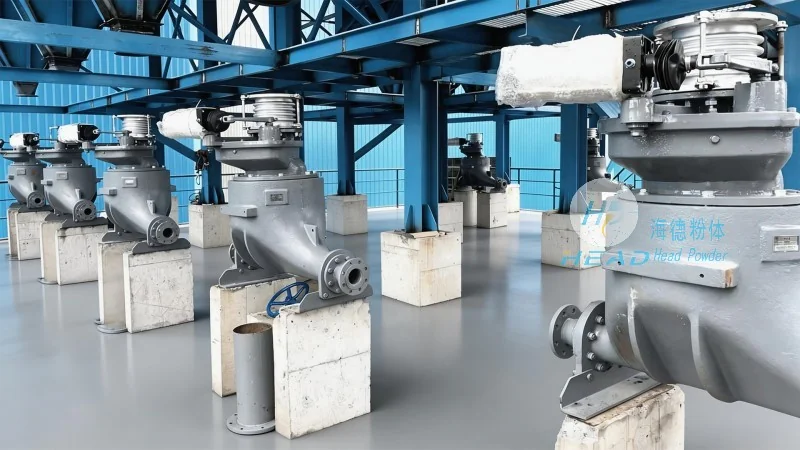
Overview of Pneumatic Conveying Systems for Calcium Oxide
Pneumatic conveying systems are engineered to transport dry powders like calcium oxide through a pressurized or vacuum environment using air or other gases. These systems offer advantages such as dust-free operation, reduced material degradation, and the ability to handle materials in a closed loop, enhancing safety and environmental compliance. For calcium oxide, which is often used in applications like flue gas desulfurization, construction, and chemical processing, the efficiency of the conveying system directly impacts overall production efficiency and product quality.
The Core Components and Their Functions
The calcium oxide dry powder pneumatic conveying equipment typically consists of several key components, each playing a vital role in the overall operation. These include the hopper or storage silo, the feeder, the conveying line, the air compressor or vacuum pump, and the discharge unit. The hopper is responsible for storing the calcium oxide powder, ensuring a consistent feed to the system. The feeder regulates the flow rate of the powder into the conveying line, preventing overloading and maintaining stable operation. The conveying line, often made of stainless steel or other corrosion-resistant materials, transports the powder through the system. The air compressor or vacuum pump generates the necessary pressure or vacuum to move the powder along the line. Finally, the discharge unit delivers the calcium oxide to the target location, such as a storage tank or processing unit.
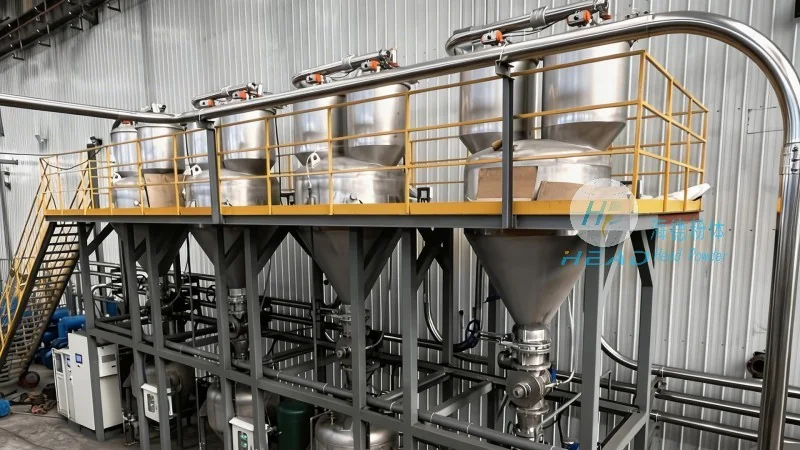
Operation Process: From Loading to Discharge
The operation of the calcium oxide dry powder pneumatic conveying system begins with loading the hopper with the powder. Once the hopper is filled, the feeder starts to meter the powder into the conveying line at a controlled rate. Simultaneously, the air compressor or vacuum pump activates, creating the required pressure or vacuum to move the powder. The powder particles are entrained by the air stream and carried through the conveying line to the discharge point. At the discharge end, the powder is separated from the air, often through a cyclone separator or other filtration equipment, and collected in the receiving container. The system operates continuously, with the feeder and compressor working in tandem to maintain a steady flow of calcium oxide. This process ensures minimal downtime and consistent material handling, which is critical for industrial applications where reliability is paramount.
Working Principle: How the System Transfers Material
The working principle of the calcium oxide dry powder pneumatic conveying system is based on the fundamental concept of fluidization and particle suspension. When air is introduced into the conveying line at a sufficient velocity, it creates a fluidized bed within the line, allowing the calcium oxide particles to be suspended and transported. The velocity of the air stream must be high enough to overcome the gravitational force acting on the particles but not so high as to cause excessive wear on the equipment or degrade the powder. The system utilizes either positive pressure (where air is blown into the line) or negative pressure (where air is drawn out of the line) to achieve the desired conveying effect. Positive pressure systems are commonly used for long-distance or high-capacity applications, as they can maintain consistent pressure and flow. Negative pressure systems, on the other hand, are suitable for applications requiring dust control and environmental protection, as they prevent dust from escaping into the environment.
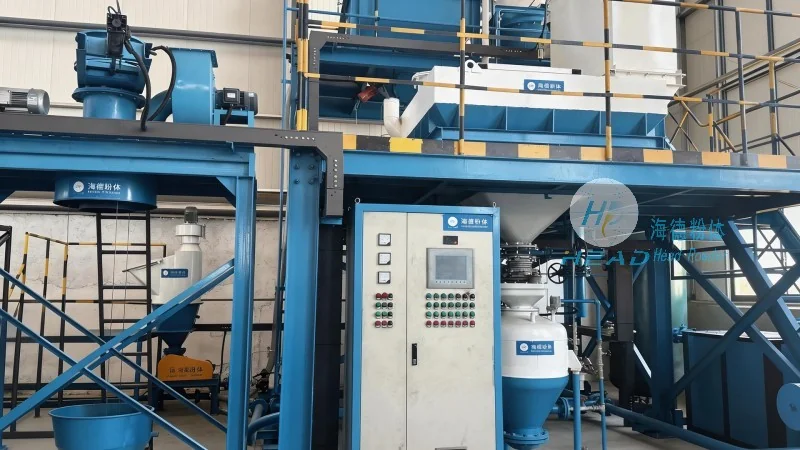
Key Considerations for Optimal Performance
Several factors contribute to the optimal performance of the calcium oxide dry powder pneumatic conveying equipment. First, the particle size and moisture content of the calcium oxide are critical. Finer particles may require higher air velocities to ensure proper suspension, while higher moisture content can lead to caking or blockages in the system. Proper material handling and conditioning, such as drying or size reduction, are essential to maintain system efficiency. Second, the design of the conveying line and components must account for the properties of calcium oxide, including its reactivity and potential for dust generation. Stainless steel or other corrosion-resistant materials are often used to prevent chemical reactions and ensure durability. Third, regular maintenance and monitoring are necessary to prevent system failures and ensure long-term reliability. This includes checking for leaks, cleaning filters, and inspecting the feeder and compressor for wear and tear.
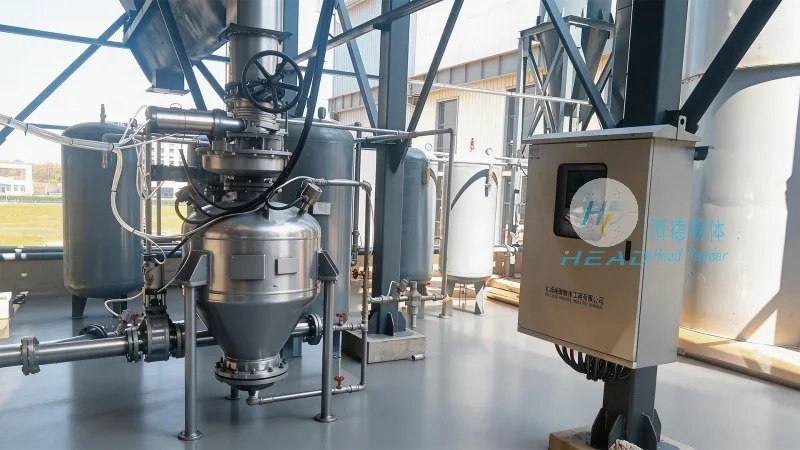
Applications and Benefits in Industrial Settings
The calcium oxide dry powder pneumatic conveying equipment is widely used in various industrial sectors due to its efficiency and reliability. In the chemical industry, it is used to transport calcium oxide for flue gas desulfurization processes, where it helps remove sulfur dioxide from exhaust gases. In construction, it is used to deliver calcium oxide for cement production or as a raw material in concrete mixes. In the food and pharmaceutical industries, it may be used for processing applications where dust control and hygiene are critical. The benefits of using such a system include reduced labor costs, improved safety by eliminating manual handling, and enhanced product quality through consistent material transport. Additionally, the closed-loop design minimizes environmental impact by preventing dust emissions and ensuring proper material containment.
Conclusion: The Importance of Efficient Conveying
In conclusion, the operation process and working principle of calcium oxide dry powder pneumatic conveying equipment are integral to modern industrial operations. By understanding the core components, operational steps, and underlying principles, industries can optimize their material handling processes, improve efficiency, and ensure compliance with safety and environmental regulations. Shandong HeadPowder Engineering Co., Ltd. provides high-quality pneumatic conveying systems that meet the specific needs of calcium oxide handling, offering reliable solutions for various industrial applications. The continuous advancement of such systems ensures that industries can maintain high productivity while adhering to the highest standards of safety and environmental responsibility.




